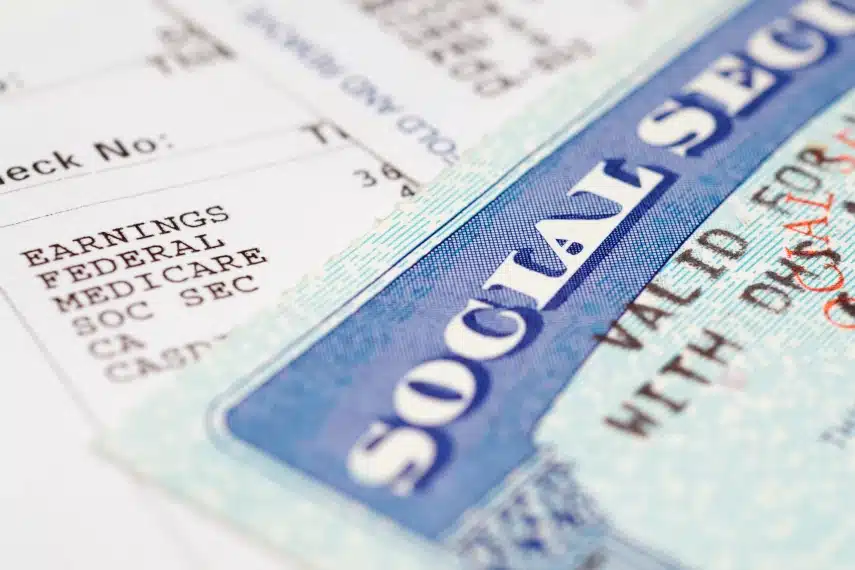
Social Security’s trust fund is expected to go bankrupt in 2032, leading to an automatic 22% cut to Social Security benefits unless Congress acts to make changes.
Numerous solutions exist to fix Social Security, but all of them incur political risks that make it difficult to find an effective solution.
Given the uncertainty surrounding Social Security, personal savings and safe haven assets such as gold could play an increasingly important role in producing retirement income.
The latest Social Security Trustees’ Report was published recently, and it didn’t report anything groundbreaking. The Social Security trust fund is expected to go bankrupt in 2032, after which time Social Security recipients can only expect to receive 78% of expected benefits.
What is groundbreaking is that Washington is finally starting to take notice. That bankruptcy date is only six years in the future, and the Senators who are elected this fall will still be within their first terms and facing reelection when the Social Security trust fund goes bankrupt.
That is making it real for many Washington policymakers that something needs to be done, and quickly. But there’s still a lot of institutional inertia pushing against any real Social Security reform, as well as political considerations that need to be taken into account.
If Congress doesn’t act to shore up Social Security soon, many retirees could see their retirement income slashed dramatically, right as the first wave of Gen-Xers are starting to draw on Social Security.
Are you prepared in the event that Social Security’s trust fund goes bankrupt and Congress hasn’t done anything about it? Could you deal with the potential loss of Social Security benefits that might result from that?
If not, are you taking steps to prepare yourself today, so that you’ll be ready no matter what happens to Social Security?
The Purpose of Social Security
Social Security was never intended to be the sole source of anyone’s retirement income. It was intended to be a support for people whose retirement income through other sources was insufficient to make ends meet, but it was never intended to replace pension plans or retirement savings.
Traditionally financial planners have referred to the “three-legged stool” model of retirement income. One leg of that stool was pension plans, which in the private sector have largely been replaced by 401(k) plans.
The second leg was individual retirement savings, such as through savings accounts, brokerage accounts, IRA accounts, etc. And the third leg was Social Security.
With Social Security benefits now being thrown into doubt, the viability of that three-legged stool is now being questioned. And if Social Security benefits can’t be relied upon, it means that Americans may now have to do more to bolster their personal savings and grow their 401(k)s, IRAs, and other retirement accounts in order to help safeguard against a potential loss of income should Social Security become unreliable.
How Social Security Works
Social Security is not just the third leg of retirement planning, it is also commonly referred to as the “third rail” of American politics. Anyone who dares to mess with Social Security risks facing the wrath of older American voters, and could end up getting voted out of office.
Social Security is probably the most popular welfare program in the United States, and it does so by masking the fact that it is a welfare program.
How many times have you heard someone say that they’re owed Social Security, or that they paid into the system so they deserve to get benefits?
It’s a common refrain among Americans who have spent decades of their careers having Social Security payroll taxes deducted from their paychecks. They think that because they had that money taken out, they’re entitled to get it back.
But the way Social Security has always worked is that the money taken out of your paycheck goes to pay someone else’s Social Security benefits. Then when you retire, your Social Security benefits are paid by taking money out of current workers’ paychecks.
Generation
Paid Into Social Security?
Receives Social Security Benefits?
Generation 1
Did not pay in
Yes, benefits paid by Generation 2
Generation 2
Yes, contributions pay for Generation 1’s benefits
Yes, benefits paid by Generation 3
Generation 3
Yes, contributions pay for Generation 2’s benefits
Yes, benefits paid by Generation 4
Generation 4
Yes, contributions pay for Generation 3’s benefits
Yes, benefits paid by Generation 5
The system only works if there are enough current workers being taxed to pay for the benefits of retirees. But if there are too many retirees and not enough workers, then the system breaks down.
For years, Social Security tax income exceeded the amount of money that was paid in benefits. That money was used to purchase non-marketable Treasury securities that were then placed in Social Security’s trust fund.
The tax money was used for government spending, while the Treasuries in the trust fund earned interest and grew the size of the trust fund. But in 2010, Social Security taxes were no longer sufficient to cover Social Security benefits, and it was only the combination of interest income and payroll taxes that allowed Social Security to remain fully funded.
That wasn’t deemed a significant problem at the time, because the trust fund was so massive and was making so much interest income that benefits could still be covered without drawing down the principal of the fund.
But in 2021 the combination of Social Security taxes and interest income from the trust fund finally became insufficient to fund Social Security benefits. The principal of the trust fund had to be tapped in order to pay out Social Security benefits.
Since that time the problem has gotten worse. As more and more Baby Boomers entered retirement and started drawing Social Security benefits, the trust fund principal was drawn down further and further.
Here we are now, only six years away from the trust fund itself being drawn down to zero. But is anyone willing to try to fix it?
Social Security and Upcoming Elections
Speaker Johnson has recently become concerned about the future of Social Security, and has started to make it an issue that he wants Congress to focus on. But as we’re now nearing the summer of an election year, the odds of any fixes made to Social Security are slim.
Fixes to the program will almost certainly be controversial, and no one wants to take the risk of losing a Congressional seat in this election, in which Republicans are desperately trying to retain control of Congress in what many are predicting could be a Democratic tidal wave.
In 2028 we have another Presidential election, and Republicans are worried too that Democrats could take the White House then, as widespread dissatisfaction with President Trump could lead to a Democratic win.
Doing anything to fix Social Security before 2028 then might be seen as a fool’s errand, a suicide mission that will only enhance Democrats’ chances of retaking Congress and the White House. And that’s assuming that Social Security even has a chance of being fixed.
Can Social Security Be Fixed?
Because Social Security was structured as a system in which beneficiaries are paid out of current workers’ tax payments, it always runs into the potential problem of a mismatch between tax receipts and benefit payments.
Among the potential fixes to Social Security are:
Cuts to benefits
Raising payroll taxes
Raising the retirement age
Raising the income limit
Taxing fringe benefits
All of these run into potential problems, because they will negatively impact millions of Americans. Here’s how.
1. Cuts to Social Security Benefits
Obviously cutting Social Security benefits is not going to be very popular. But if Social Security’s trust fund goes bankrupt, that’s what would happen automatically, as Social Security literally would not have enough money to pay out everyone expecting benefits.
In order to shore up the trust fund today, cuts would have to be made immediately in order to keep the trust fund from being run down. But voting to cut Social Security benefits is political suicide, which is why it isn’t likely to happen.
2. Raising Social Security Payroll Taxes
If expenses exceed income, one way to rectify that is to raise income, in this case raise the amount of money brought in from Social Security payroll taxes. Anyone who receives a W-2 knows that you pay FICA (Federal Insurance Contributions Act) taxes that are deducted from your paycheck.
Current FICA contributions require employees to pay 7.65% of their paycheck and for employers to kick in an additional 7.65%. This money is split between contributions to Social Security (6.2%) and Medicare (1.45%).
Raising these payroll taxes wouldn’t be very popular, but if the raises were scheduled for the future or phased in over time, as previous increases have been, the political fallout could be managed. But with only six years until bankruptcy, small raises to payroll taxes are unlikely to be able to fund Social Security’s shortfall.
3. Raising Social Security’s Retirement Age
If you were born after 1960 you must be 67 years old in order to receive full Social Security benefits. Alternatively, you can elect to start taking Social Security benefits at age 62, albeit with reduced payments over the rest of your lifetime, or delay taking Social Security until age 70, with increased monthly payments for the rest of your life.
Proposals to help shore up Social Security have considered raising the full retirement age from 67 to 70. This is partially to help offset the impact of people living longer.
Currently a 65-year-old man is expected to live another 18.12 years, while a 65-year-old woman is expected to live 20.66 years. Compare that to 1965, when a 65-year-old man was expected to live another 12.92 years, and a 65-year-old woman was expected to live another 16.34 years.
That average of four years of additional lifespan adds up, particularly when it’s multiplied over tens of millions of people, and when those extra benefits haven’t been fully funded.
A healthier, longer-living population is going to draw more Social Security benefits, and if direct cuts to benefits aren’t feasible and raising payroll taxes isn’t feasible, then the indirect payment cut of raising full retirement age may need to be considered.
4. Raising Social Security Income Limits
Another issue facing Social Security is the fact that only a certain amount of income is taxed for Social Security. For 2026, only the first $184,500 of earnings is taxed.
Any amount above that isn’t subject to the 6.2% Social Security portion of FICA. With so many large earners in this country, that obviously leaves a large amount of wage income untaxed for Social Security.
Many proposals to raise Social Security income tax limits create what is referred to as a “donut hole” in order not to excessively burden middle income earners. For instance, Social Security taxes might be imposed on the first $184,500 of income, then again on income over $400,000, so that any income earned between $184,500 and $400,000 wouldn’t be subject to Social Security taxes.
Presumably the income above $400,000 would also be subject to the employer portion of the Social Security taxes, which would increase labor costs to firms employing high earners. But would it garner enough extra income to put Social Security on a sound financial footing?
5. Taxing Health Insurance
One final idea to help fund Social Security is to tax non-wage fringe benefits received by workers, such as employer-provided health insurance. Currently the cost of premiums for employer-sponsored health plans don’t count towards Social Security’s tax base.
Given how pervasive employer-funded healthcare is, with an estimated $1.4 trillion paid in employer-sponsored health insurance, that’s a significant pot of money to tax. Imposing a Social Security tax on those benefits could raise an estimated $70 billion a year in extra funds for Social Security.
Would it be popular? No.
But could it help prop up Social Security? By itself that amount of money wouldn’t be enough to fund the entire shortfall, but as part of a multi-tiered approach it could help make up the funding gap.
Can Gold Help Protect Against Social Security’s Failures?
At Goldco we have been warning for years about the impending bankruptcy of the Social Security trust fund. Our customers and readers of our blog are well aware of the problems that Social Security has, and many have taken steps to help protect themselves against that by buying gold.
Gold has been trusted as a safe haven asset and an inflation hedge for centuries, and it continues to perform well in those roles.
During the 1970s stagflation the gold price rose at an annualized rate of over 30% per year, far outpacing inflation that peaked at 13% in 1979. And more recently, the gold price has risen 166% since 2020, while inflation has risen 29%
Gold set new record highs in early 2026, and many analysts expect gold prices to continue climbing. Bank of America, for instance, expects gold to hit $6,000 an ounce within the next 12 months.
That kind of potential for price growth could be a boon for anyone looking to help hedge against the potential loss of income that could result if Social Security’s trust fund ends up going bankrupt.
Now is the time to start thinking about Social Security’s financial troubles, assessing how it could impact you, and taking steps to help protect yourself. Gold could be one part of your plan to help mitigate the impact of a potential Social Security trust fund bankruptcy.
Whether you’re looking to buy gold with retirement savings through a tax-advantaged gold IRA, or whether you want to make a direct purchase of gold coins or gold bars to store yourself, Goldco has quality gold products available to Americans from all walks of life.
At Goldco we work hard to provide our customers with white glove customer service, and our over 8,000 5-star reviews are a testament to the lengths we go to satisfy our customers with quality service and outstanding precious metals products.
With over $3 billion in precious metals placements, we at Goldco have worked hard to make ourselves one of the best gold IRA companies in the country. Contact one of our precious metals specialists today to learn more about how you can use gold to help safeguard yourself against Social Security’s problems.
Trump accounts are tax-deferred savings accounts for US children that allow parents, guardians, and employers to contribute up to $5,000 annually using after-tax dollars Initial asset choices...
Social Security’s trust fund is expected to go bankrupt in 2032, leading to an automatic 22% cut to Social Security benefits unless Congress acts to make changes Numerous solutions exist to...
With pension plans disappearing and Social Security’s trust fund nearing depletion, maximizing individual retirement savings is becoming increasingly important Experts estimate that at least...
*Applies only to qualified orders. Get up to 5% back in FREE Silver when you purchase $50,000 – $99,999 in Goldco premium coins. Get 10% in FREE Silver when you purchase $100,000 or more in Goldco premium coins. Cannot be combined with any other offer. Additional rules may apply. Contact your representative to find out if your order qualifies. For additional details, please see your customer agreement. Goldco does not offer financial or tax advice regarding the purchase of precious metals.