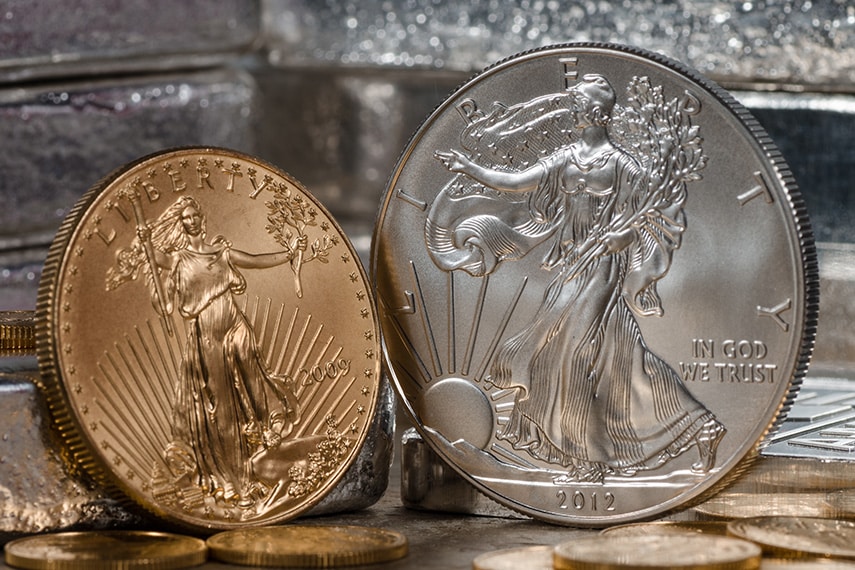
- Precious metals like gold and silver act as safe haven assets against persistent inflation, out-of-control federal spending, and economic volatility.
- Silver demand is driven most heavily by industry and silverware, while gold demand is driven largely by jewelry, central banks, and recently safe haven demand.
- Savers can buy physical precious metals either via a direct cash purchase or by starting a precious metals IRA through a tax-free rollover.
With ongoing market volatility, ballooning federal debt, and persistent inflation eroding the dollar’s purchasing power, many Americans are re-evaluating their portfolios. Memories of past downturns, such as the 2008 financial crisis, in which stock markets plummeted over 50% while gold gained over 25%, are still in the back of many people’s heads.
Precious metals such as gold and silver have served as safe haven assets for centuries, offering stability during times of economic turmoil and financial volatility. However, if you’re looking to buy precious metals, one question you may ask is: Should I buy gold or silver?
Both of these precious metals serve as safe haven assets and inflation hedges, but each can play a distinct role within a portfolio. Here is what you need to know when trying to decide between buying gold vs. silver.
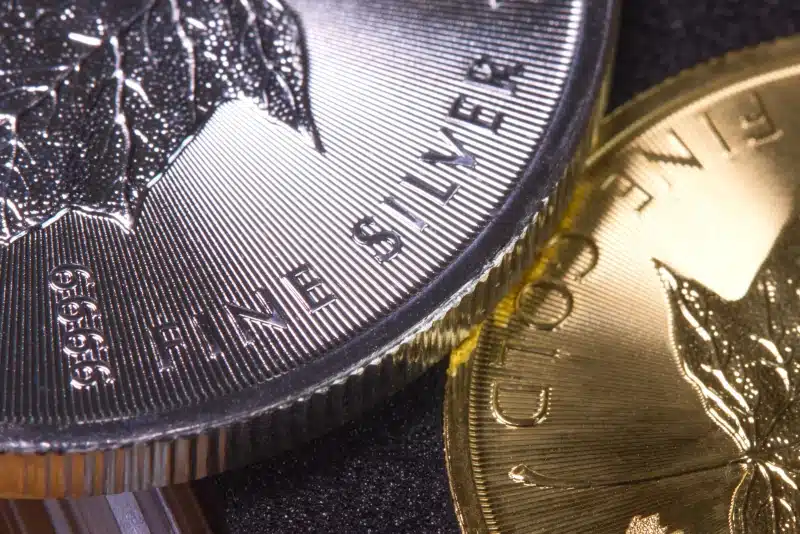
Gold vs. Silver: Key Details Compared
|
Description
|
Gold
|
Silver
|
| Major Roles |
Safe haven asset, inflation hedge, central bank reserves, jewelry |
Industrial demand, silverware and jewelry, less coin and bar demand than gold |
| 52-Week Price Range |
$3,764.00 – $5,626.80 |
$44.89 – $121.79 |
| Price Volatility |
Moderate, but often lower than stocks |
Normally twice as volatile as gold |
| Industrial Demand |
6% demand from technology
33% demand from jewelry |
59% demand from industry
21% demand from jewelry and silverware |
| Central Bank Demand |
Over 4,000 tonnes of purchases since 2022 |
Negligible central bank purchases |
| Storage Considerations |
Compact store of wealth, $50,000 can fit in the palm of your hand |
Bulky compared to gold, $50,000 would require a small backpack |
1. Price, Affordability, and the Gold-to-Silver Ratio
The Gold-to-Silver Price Ratio
- The gold-to-silver price ratio is calculated by dividing the price of gold by the price of silver.
- The ratio measures how many ounces of silver it would take to purchase a single ounce of gold.
- Over the past 30 years the gold-to-silver price ratio has fluctuated from about 30:1 to over 110:1, while mostly staying between a range of about 50:1 and 80:1
- When the ratio rises significantly above historical norms (reaching 80:1 to over 100:1), it might be signaling that silver is historically undervalued relative to gold.
- Some precious metals buyers track these ratio shifts to identify favorable buying opportunities between the two metals.
Affordability and Wealth Density
- Silver’s lower price per ounce allows savers to accumulate more physical ounces of metal versus gold.
- Gold offers better wealth concentration than silver, enabling people to hold tens of thousands of dollars in the palm of their hand.
- Silver requires significantly greater physical storage space and heavier transport handling for equal dollar amounts of metal.
|
Storage Metric
|
$100,000 in Gold (spot price)
|
$100,000 in Silver (spot price)
|
| Troy Ounces |
23.28 |
1,578.03 |
| Physical Weight (avoirdupois pounds) |
1.6 |
108 |
| Volume (cubic inches) |
2.29 |
285.34 |
| Volume equivalent (pure metal) |
~⅔ of a D-cell battery; volume in coins or bars will be larger |
Indoor volleyball; volume in coins or bars will be larger |
| Portability |
Very easy to transport and conceal |
Bulky and heavy |
2. Price Volatility and Market Behavior
- Gold functions often as a countercyclical safe haven asset, and can gain in value even during market downturns.
- Silver often moves up and down in tandem with gold, but silver price moves can be larger percentagewise.
- At current prices, if silver rises $1 in price and gold rises $30, that represents a substantially larger percentage increase for silver than for gold.
- Silver’s increased upside price swings can benefit those looking for wealth gains during a precious metals bull market, while gold’s lower volatility may appeal to those seeking long-term wealth preservation.
|
Time Period
|
S&P 500
|
Gold Price
|
Silver Price
|
| 2007-2009 Bear Market |
-56.78%
|
25%
|
-2.57%
|
| 2008-2011 Recovery |
81.2%
|
165.8%
|
442%
|
| 1970s Stagflation |
16%
|
1,398%
|
1,585%
|
| 2025 |
16.39%
|
65%
|
144%
|
3. Supply and Demand Dynamics
Gold Demand: Central Banks and Safe Haven Buyers Lead
- Central banks have accumulated gold at record rates in recent years, and now hold more gold in their reserves than US Treasury debt.
- Jewelry fabrication normally accounts for 50% or more of annual gold demand, driven at least partially by cultural factors promoting gold jewelry in India and China.
- Physical purchases of coins and bars surged in 2025, to 44% of annual gold demand.
- Industrial demand normally makes up 10% or less of the total gold market, leaving the gold price relatively unaffected by gold use trends in industry and technology.
Silver Demand: Driven by Green Technology and Manufacturing
- Nearly 60% of annual silver demand comes from industry, largely from electronics and electrical products, of which photovoltaics (i.e. solar panels) are a growing share.
- The transition toward electric vehicles and solar infrastructure has driven a continued structural deficit of over 100 million ounces of silver each year since 2021.
- Increases in safe haven retail purchases of silver can exacerbate those deficits, helping put further upward price pressure on silver.
|
Demand Source (2025)
|
Gold Demand
|
Silver Demand
|
| Industry & Technology |
6.4%
|
59%
|
| Jewelry/Silverware |
32.8%
|
21.1%
|
| Physical (Coins/Bars/ETFs) |
43.9%
|
17.8%
|
| Central Banks |
16.9%
|
0%
|
4. Physical Storage Options for Gold and Silver
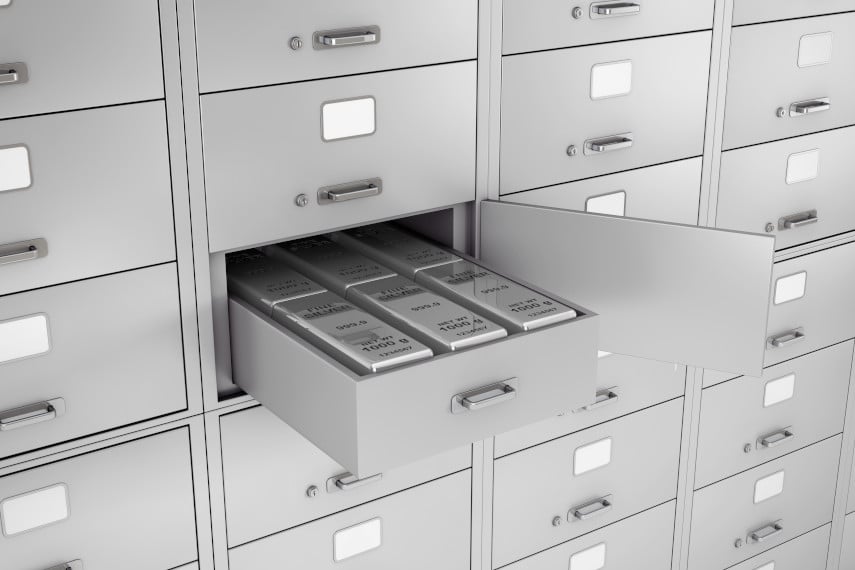
- Safe deposit boxes at commercial banks mean that you can only access your gold and silver during bank operating hours. You also remain subject to bank holidays and institutional insolvency.
- Storing large amounts of metals at home may require heavy safes, a security system, and insurance riders that can cost 1-2% of your precious metals’ value each year.
- Bullion depositories can provide institutional-grade vaulting, multiple layers of security, and comprehensive insurance coverage.
- Setting up a self-directed Precious Metals IRA allows you to store your IRA-eligible coins and bars in top-tier depositories (such as Delaware Depository) with competitive storage fees.
|
Storage Method
|
Security Level
|
Insurance Coverage
|
Annual Cost
|
Physical Access
|
| Home Safe |
Low to Moderate |
Normally requires custom insurance rider |
Insurance cost, plus safe |
Instant |
| Safe Deposit Box |
Moderate |
Not insured by FDIC or bank |
$50-300 |
During bank hours |
| Bullion Depository (Gold IRA) |
High |
Insured |
Storage fee, $100-300 |
Some visits allowed; otherwise only at distribution |
5. Buying Precious Metals for Retirement
Cash Purchases vs. Precious Metals IRAs
- Savers can buy physical gold and silver coins and bars directly with cash, check, or wire for delivery straight to their doorstep.
- Direct physical cash purchases allow you to take possession of your gold and silver assets directly so that you have instant and immediate access to them.
- Savers with retirement savings in existing accounts such as a 401(k), 403(b), TSP, or IRA account can diversify their portfolios by rolling over a portion of their assets into a precious metals IRA through a tax-free rollover.
- Precious metals IRAs allow you to acquire physical gold and silver bullion while enjoying the same tax advantages as a conventional IRA account.
How to Open a Precious Metals IRA in 3 Simple Steps
- Step 1: Open Your Account: Establish your self-directed precious metals IRA with the help of Goldco’s dedicated specialists and choose your IRA custodian.
- Step 2: Fund Your IRA: Execute a tax-free direct rollover from your existing 401(k), 403(b), TSP, or conventional IRA.
- Step 3: Select Your Metals: Choose IRA-eligible gold coins and silver coins and have them delivered securely to a world-class bullion depository.
Which Metal Is Right for You?
Choosing between gold and silver depends on your timeline, risk profile, and long-term financial goals.
- Are you nearing retirement, or do you have a decade or more to continue maximizing your savings?
- Are you interested in maximum wealth preservation, or do you want to maximize your wealth growing potential during a precious metals bull market?
- Do you want to minimize volatility at the potential expense of seeing lower price appreciation?
- Do you plan to make a direct cash purchase to store metals at home, or do you prefer to start a precious metals IRA?
These are some of the questions you may ask yourself as you decide whether to buy gold or buy silver, or as you consult your financial advisor. With over $3 billion in precious metals placements, more than 8,000 5-star customer reviews, and an A+ rating with the Better Business Bureau, Goldco has been trusted by thousands of Americans who have sought to help safeguard their savings with gold and silver.
Don’t let your retirement savings remain vulnerable to inflation, rising government debt, or market volatility. Contact Goldco today for your free Gold & Silver Kit, and start learning more about the many benefits of owning gold and silver.
This article was originally published in November 2020 and was updated in October 2026.