Gold bars are produced in a variety of different weights, measured in troy ounces, grams, or kilograms, to accommodate a wide variety of purchasers’ budgets.
Small gold bars can offer greater affordability and liquidity for individual buyers, while larger bars can offer lower premiums and easier storage for institutional buyers.
While gold bars offer some advantages versus gold coins, they don’t have any numismatic value and could be more difficult to authenticate when it comes time to sell.
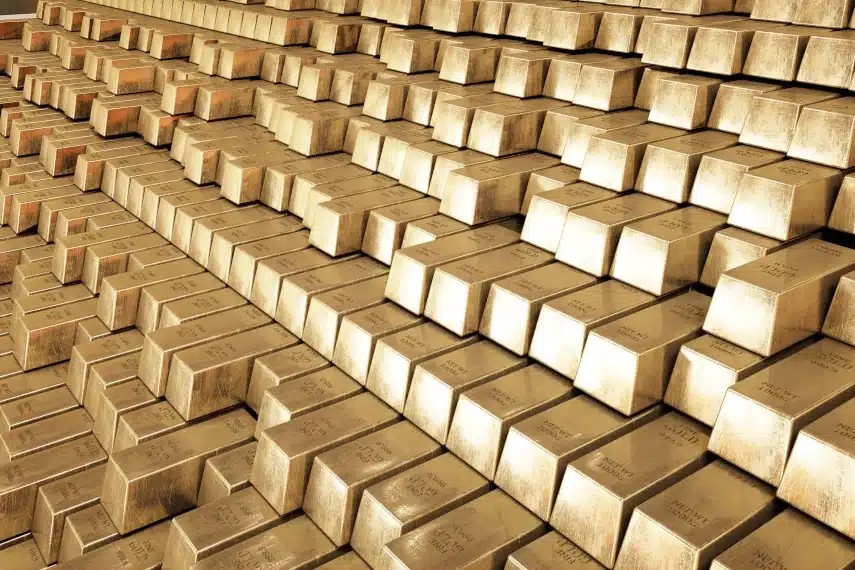
When you think of gold bars, you probably think of Fort Knox, or the Federal Reserve’s subterranean vault in New York, with piles and piles of gold bars sitting stacked on rows upon rows of pallets.
But while the government does own hundreds of millions of ounces of large gold bars, gold bars that cost millions of dollars apiece aren’t the only options out there when it comes to buying gold bars. Gold bars come in a variety of weights to suit just about anyone’s budget.
If you want to learn more about gold bars, and why owning gold is so important, keep reading.
How Gold Bars Are Produced
Casting
Minting
There are two primary methods of producing gold bars: casting and minting.
Cast gold bars, sometimes referred to as poured gold bars, are produced by pouring molten gold into a form or mold. Depending on the size of the mold and how they’re processed after casting, these bars may not weigh exactly the amount they’re supposed to.
For instance, the 400-ounce Good Delivery bars that are the backbone of the London gold market don’t have to weigh exactly 400 ounces, they’re allowed to weigh between 350 and 430 ounces.
This doesn’t mean, though, that you’ll pay a 400-ounce price for a bar that weighs 350 ounces or one that weighs 430 ounces. These bars will be measured on delivery and priced according to their actual weight.
Minted gold bars are normally produced from rectangularly-shaped gold blanks of a certain weight, which are then minted in a press in a similar manner to gold coins. The surface finish of these gold bars is normally smoother and shinier than that of cast gold bars.
Units of Weight for Precious Metals
Troy Ounce
Gram
Kilogram
If you’ve ever tried to buy gold, you probably have noticed that most gold coins are weighed in ounces. More specifically, they’re weighed in troy ounces, not the avoirdupois or “standard” ounces that you’re used to in the grocery store.
An avoirdupois or “standard” pound weighs 7,000 grains, and is divided into 16 ounces, which each weigh 437.5 grains. If you own guns you’ll know grains as a weight, so one standard ounce weighs the same as about 2 .45 ACP bullets or 4 9mm bullets.
A troy ounce, on the other hand, weighs 480 grains, and there are 12 troy ounces to a troy pound, so that the troy pound weighs 5,760 grains. Thus while a troy ounce weighs more than a standard ounce, a troy pound is lighter than a standard pound.
But gold bars aren’t measured just in troy ounces. They can also be measured in grams or kilograms, which are popular measurements in Europe and Asia.
If you remember your metric system from high school, these are the same grams and kilograms that are used in scientific measurement.
Smaller bars are generally weighed in grams. Larger bars are weighed in kilograms, with the 1-kilo bar being one of the approved sizes for futures contracts on US exchanges.
While the many different units of measurement can make it a little difficult to compare sizes between metric and troy ounce-denominated gold bars, our handy table below can help you make comparisons between different sizes of gold bars.
Common Sizes and Weights of Gold Bars
Like gold coins, gold bars come in a variety of sizes and weights. Here are some gold bar sizes you may encounter during your search for gold bars to buy.
Bar Size
Grams
Troy Ounces
Standard Ounces
Similar Weight
1 gram
1
0.032
0.035
Paper clip
2 gram
2
0.064
0.071
Modern US dime
2.5 gram
2.5
0.080
0.088
Silver US dime
5 gram
5
0.161
0.176
Modern US nickel (5-cent coin)
10 gram
10
0.322
0.353
AAA alkaline battery
20 gram
20
0.643
0.705
AA alkaline battery
50 gram
50
1.608
1.764
2 AA batteries
100 gram
100
3.215
3.527
Chocolate bar
250 gram
250
8.038
8.819
Stick of butter
500 gram
500
16.075
17.637
Can of soup
1 kilogram
1,000
32.151
35.274
2 bags of coffee beans
1/10 oz
3.110
0.10
0.109
Pre-1982 US penny
¼ oz
7.776
0.25
0.274
Modern US quarter & dime
½ oz
15.552
0.5
0.549
Pencil
1 oz
31.104
1
1.097
Slice of bread
2 oz
62.207
2
2.194
Tennis ball
5 oz
155.52
5
5.486
Baseball
10 oz
311.04
10
10.971
2 D alkaline batteries
20 oz
622.07
20
21.943
NBA basketball
100 oz
3,110.4
100
109.71
Newborn baby
400 oz
12,441
400
438.86
Bag of fertilizer
The Good Delivery Bar and System
The Good Delivery system is a series of standards and rules established by the London Bullion Market Association to describe the physical characteristics of gold bars used in the London gold market. The rules encompass not only the characteristics of the gold bars themselves, but also set requirements for approved refineries and set up a number of companies as referees for the system.
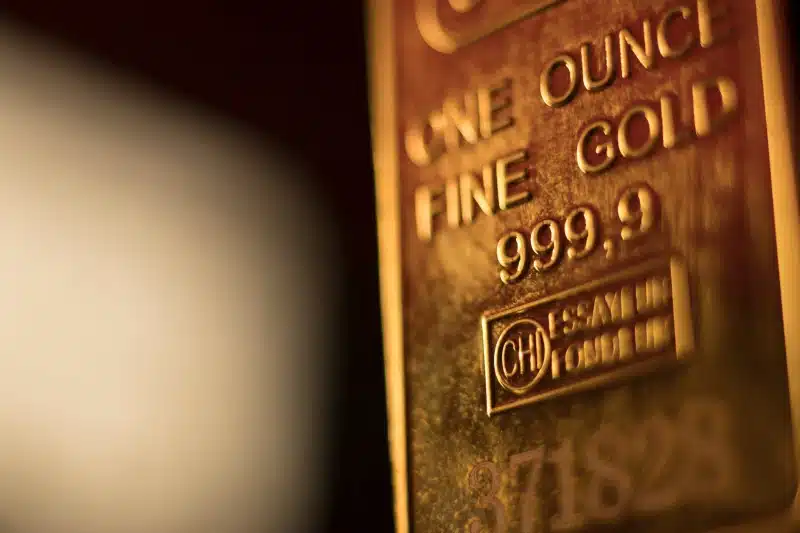
Gold Good Delivery bars must meet a minimum fineness of .995 (99.5% pure gold) and must weigh between 350 and 430 ounces. Bars must also be marked with a serial number, a year of manufacture, their fineness, and the refiner’s hallmark. There are also a series of recommended dimensions for Good Delivery bars.
Any bars that don’t meet Good Delivery standards must be marked with NGD, for Non-Good Delivery. This system helps ensure that the bars that circulate in London gold markets conform to a universally accepted set of standards.
The average gold buyer, however, isn’t going to be able to purchase a Good Delivery bar, which at the current time would cost about $2 million or more. Still, you have a choice of what size of gold bar to buy, and you may need to choose between large gold bars and small gold bars.
Advantages of Small Gold Bars vs. Large Gold Bars
Advantage of Small Gold Bars
Description
Affordability
Small gold bars cost less than large gold bars.
High Liquidity
Small bars can be easier to sell than large gold bars.
Easy Storage and Transport
Small gold bars are easy to store and transport.
Gifting
Small gold bars can make relatively affordable gifts.
1. Small Gold Bars Are More Affordable
In absolute terms, small gold bars are cheaper than large gold bars. A 1-gram gold bar will cost you several hundred dollars, while a 1-kilo gold bar will cost you several hundred thousand dollars.
For those with smaller budgets, buying smaller gold bars will allow you to buy more gold bars than if you were to choose large gold bars.
2. Small Gold Bars Can Be More Liquid
Gold markets are already highly liquid, with gold trading around the world nearly 24/7. But when it comes to selling the gold you own, you want to know whether there will be a buyer available.
Because small gold bars cost less, it can be easier to find a buyer for them when it comes time to sell. The number of people who can buy a $500 gold bar is going to be much larger than those who can buy a $50,000 gold bar.
3. Small Gold Bars Are Easier to Store and Transport
Gold is a very compact store of wealth, and even a 400-ounce Good Delivery bar is relatively easy to hide. But these large bars are heavy and often require specialized transport to ship.
Compared to large gold bars, small gold bars are easy to store at home, hide in a tucked away corner of a bookshelf, or carry in your purse or even your pocket.
4. Small Gold Bars Can Make Nice Gifts
If you have children or grandchildren whom you want to teach about the importance of precious metals in helping to protect and build wealth, a small gold bar can be a relatively inexpensive way to introduce them to precious metals.
Disadvantages of Small Gold Bars vs. Large Gold Bars
Of course, there are some disadvantages to small gold bars too.
Disadvantage of Small Gold Bars
Description
Higher Premiums
Premiums on small gold bars are often higher than on large gold bars.
Not as Cost-Effective
Per unit cost of gold is higher when buying small gold bars than large gold bars.
1. Small Gold Bars Often Come With Higher Premiums
One of the major disadvantages to small gold bars is that you’ll pay higher premiums versus the spot price of gold than you would for larger gold bars.
A 1-kilo cast gold bar is relatively straightforward to produce. Just pour 1 kilogram of molten gold into a mold, let it cool, then stamp it with a hallmark, serial number, and fineness, and you’re done.
With a 1-gram gold bar you’re going to be minting that bar on a specialized press. For 1 kilogram of gold, that means getting 1,000 1-gram planchets, minting each one with specialized dies that you’ve designed and machined.
1-gram gold bars are also tiny, which means they can be easily lost, so they’re often placed inside a plastic holder with a specific bar code, QR code, or other certificate of authenticity.
The amount of work it takes to produce 1 kilogram of 1-gram bars is a lot more than it takes to produce a single 1-kilo gold bar, and that will be reflected in a higher price per ounce of gold on the smaller bars.
2. Smaller Gold Bars Aren’t as Cost-Effective
That means that if you’re looking to buy gold at the lowest unit cost, buying smaller gold bars, or the smallest gold bars, may not get you the best bang for your buck.
When looking at small gold bars vs. large gold bars, you’ll want to balance your desire for liquidity and compactness with the ability to maximize how much gold your dollars can buy.
Advantages of Gold Bars vs. Gold Coins
Advantage of Gold Bars vs. Gold Coins
Description
Lower Premiums
Gold bars sometimes command lower premiums than gold coins.
More Efficient Stacking
Gold bars that are rectangular or square offer a more efficient use of space than round gold coins.
Wide Size Range
Gold bars are available in a wider range of sizes than gold coins.
1. Gold Bars Sometime Command Lower Premiums
Compared to gold coins, gold bars sometimes command lower premiums. While the savings per unit may be small, if you’re making a large gold purchase that difference in premiums could add up.
2. Gold Bars Can Be Stacked and Stored More Efficiently
Square or rectangular gold bars are more efficient at saving space than round gold coins, as they maximize use of corners. Stacking gold coins also generally requires buying coin tubes, some of which are round also and don’t stack as well as square tubes.
If you’re buying large amounts of gold, gold bars may stack easier and help you minimize the storage footprint of your gold.
3. Gold Bars Come in a Wider Range of Sizes
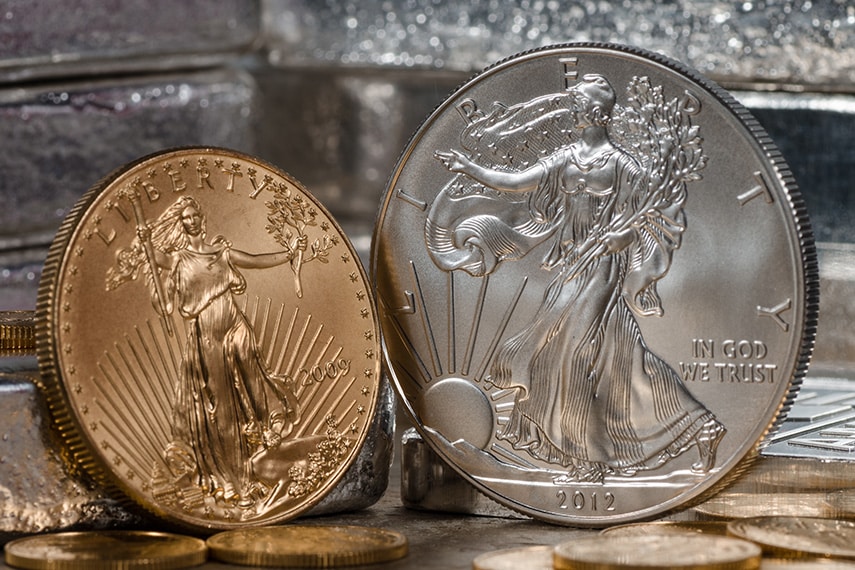
Gold coins normally come in 1/10, ¼, ½, and 1-ounce sizes. Occasionally you may find smaller gold coins, like 1/20-ounce, or larger coins like 2-ounce gold coins.
Gold bars, on the other hand, are available in over a dozen different weights, measured in both metric weights and troy ounce weights. If you have a specific weight of gold that you want to buy, you might have a better chance of finding it in gold bars rather than gold coins.
Disadvantages of Gold Bars vs. Gold Coins
Gold bars have disadvantages, too, which is one reason gold coins remain so popular.
Disadvantage of Gold Bars vs. Gold Coins
Description
Low Divisibility
If you buy larger gold bars, you can’t divide your gold holdings easily to sell your gold.
Authentication Issues
Large bars may require authentication and testing when you sell, adding time and expense.
Lower Liquidity
Not as many people may be familiar with gold bars compared to popular gold coins like Gold American Eagles.
Need for Storage
Larger gold bars may require specialized storage, whereas gold coins are easier to store or hide at home.
No Numismatic Value
Gold bars don’t have any collectible value, whereas certain gold coins may have added collector value beyond just the value of their gold content.
1. Gold Bar Holdings Aren’t Easily Divisible
If you buy large gold bars, you can’t sell small portions of your gold holdings, you’ll have to sell the entire bar. If you have a 500-gram gold bar, for instance, that’s about 16 ounces of gold.
You’ll have a lot easier time trying to sell 16 1-ounce gold coins than trying to sell a single 500-gram gold bar.
2. Possible Authentication Issues
Depending on how large your bar is or how it’s packaged, the buyer may want to assay and test it upon delivery. That can add time and expense when you want to sell.
3. Lower Liquidity
If you try to sell your gold bars locally, local buyers may not be as familiar with gold bars, particularly from smaller or less well-known issuers, than with popular gold coins from mints like the US Mint, Perth Mint, or New Zealand Mint.
That could mean lower offers to buy, or perhaps buyers passing on buying your gold bars.
4. Need for Storage
Larger gold bars, while a compact store of value, can be harder to securely store at home. That may require you to buy a safe or store them in a safe deposit box, which adds expense.
Gold coins, especially if you only have a small number of them, can be hidden discreetly around your home.
5. No Numismatic Value
Some gold coins can gain extra value to collectors through rarity, condition, or other factors that make them more valuable than just their gold content. Gold bars won’t ever have that added numismatic value.
Common Questions About Gold Bars
How can I tell if a gold bar is real?: There are numerous ways to check if the gold bars you have are real. One of the first things to do is to check if the bar matches the published dimensions and weight.
Gold bars are also non-magnetic, so they should not be attracted to a magnet. Gold also makes a distinctive pinging sound when it is struck, versus base metals which have more of a thudding sound.
Finally, there are chemical tests that can be done by professionals, although these may damage your gold products.
But one of the best ways to avoid counterfeit gold is to work with trusted partners like Goldco who work with mints around the world to bring you guaranteed authentic gold so that you don’t have to worry about possibly buying counterfeit gold.
What is the best gold to buy?: That all depends on your particular needs and how gold fits into your financial planning.
For some people, gold may make up a large portion of their portfolio, and they may hang onto it for a long time. Others may only want to buy gold as a short-term hedge against a possible economic downturn.
And other people may just want to hang onto a few gold coins or gold bars at home in case of a rainy day. How much gold you buy and the form you buy it in will be determined by how you plan to make use of your gold.
How can I keep my gold bars safe?: Gold that you buy with a direct cash purchase can be stored at home, in a safe deposit box or, if you’re making a particularly big purchase, can be stored in a bullion depository.
If you’re buying gold through a gold IRA, your gold bars will have to be stored in a bullion depository. Goldco works with experienced precious metals bullion depositories to ensure that our customers’ precious metals assets remain safe and secure.
What precious metals can I hold in a gold IRA?: Gold IRAs aren’t limited to just gold. They can also hold silver coins or silver bars, as well as platinum and palladium bullion.
What kinds of gold bars are IRA-eligible?: IRAs are only allowed to acquire gold coins or gold bars with a minimum fineness of .995 (99.5% pure gold). Using IRA assets to purchase gold coins or gold bars with a lower gold content that are not IRA-eligible would be considered a distribution of assets and could subject you to taxes and penalties.
Can I take physical possession of the gold in my gold IRA?: The gold in your gold IRA must be stored in a bullion depository, but you may take possession of that gold when you decide to take a distribution through an in-kind distribution.
Some companies claim that there is such a thing as a home storage IRA, which purportedly allows you to purchase gold and silver using IRA assets and store those precious metals at home. These types of arrangements have been explicitly banned by tax courts, and anyone attempting to start a home storage IRA could face significant taxes and penalties.
How can I fund a gold IRA?: One of the most popular ways to fund a gold IRA is through a gold IRA rollover. You can roll over assets tax-free from an existing retirement account such as a 401(k), 403(b), TSP, or IRA account into a gold IRA.
Goldco’s precious metals specialists have helped many customers navigate this rollover process. Contact our specialists to learn more about how the gold IRA rollover process works.
I already own gold bars. Can I move those into a gold IRA?: IRAs are prohibited from engaging in certain transactions, including IRA owners selling their property to an IRA.
This is why it can be helpful to consult with your financial advisor or tax advisor to go through the IRA rules and regulations in order to make sure that you don’t inadvertently end up making a mistake that could subject you to taxes and penalties.
How to Buy Gold Bars
There are numerous ways to buy gold bars, from going down to your local coin shop, frequenting online marketplaces, or finding established precious metals companies that can provide you with gold products.
Gold can be purchased as a direct cash transaction, allowing you to take possession of your gold and store it in whichever way you see fit.
You can also buy gold bars for a gold IRA, which allows you to own physical gold within a tax-advantaged retirement account.
Gold IRAs can be funded through tax-free rollovers from existing retirement accounts such as a 401(k), 403(b), TSP, or IRA account. And when you take a distribution from your gold IRA, you can take it either in cash or in gold.
As with any other asset purchase, whether you choose to buy gold bars is a decision that you’ll make after assessing your unique individual goals. Each person’s financial situation, time horizon, and financial ability can play a role in whether they buy gold bars.
Some people look to gold as an inflation hedge against inflation that remains stubborn. Others may fear a potential financial crisis, and look to gold as a safe haven asset, hoping it will perform in the next few years just as well as it did from 2008 to 2011.
And other people may just want to diversify their portfolios a little bit, just in case.
If you’re looking to buy gold, no matter the reason, it can be important to work with trusted partners who can provide you with the products and support you need.
Goldco has worked hard to make ourselves one of the top gold and silver companies in the country, and our more than 8,000 5-star reviews are a testament to the lengths we go to provide premium gold and silver products and exemplary customer service.
Our specialists have helped thousands of customers benefit from adding gold to their portfolios. Will you be next?
Call Goldco today to learn more about how owning gold can help you safeguard your financial future.
Precious metals like gold and silver act as safe haven assets against persistent inflation, out-of-control federal spending, and economic volatility Silver demand is driven most heavily by...
Younger generations are increasingly turning to buying gold to help protect their wealth against inflation, currency devaluation, and the underperformance of traditional financial assets Gold...
Key Takeaways Gold prices and government bond yields are rising simultaneously as buyers demand higher compensation for long-term fiscal, duration, and inflation risks rather than economic...
*Applies only to qualified orders. Get up to 5% back in FREE Silver when you purchase $50,000 – $99,999 in Goldco premium coins. Get 10% in FREE Silver when you purchase $100,000 or more in Goldco premium coins. Cannot be combined with any other offer. Additional rules may apply. Contact your representative to find out if your order qualifies. For additional details, please see your customer agreement. Goldco does not offer financial or tax advice regarding the purchase of precious metals.