Even though many gold products are of high purity and easily traded, gold is not considered a high quality liquid asset (HQLA) under Basel III banking regulations.
The London Bullion Market Association (LBMA) and other gold advocacy organizations argue that gold’s performance is similar to that of US Treasuries, so that gold should be considered an HQLA.
If gold were to become classified as an HQLA, it could lead to increased gold demand from banks and financial institutions, which could boost the gold price.
If you asked people who know about gold whether it is a high quality liquid asset, you probably would have quite a few who would answer in the affirmative. Gold can certainly be produced to high quality, and it is a notoriously liquid asset.
But the term “high quality liquid asset” (HQLA) has a specific meaning in post-financial crisis financial regulation. And for the purposes of modern banking regulation gold is not considered to be an HQLA, while cash, US Treasuries, and even some corporate stock and debt instruments are.
For people who understand gold markets and gold price performance, this can seem puzzling. But given gold’s continued popularity and recent price performance, could gold eventually get added to the list of high quality liquid assets?
Is Gold High Quality?
When we think of high quality, particularly when it comes to metals, we often think of purity. The more pure a metal is, the fewer impurities it has, the higher the quality.
Gold can come in a variety of different purities, from raw gold ingots that have to be purified at by assayers, to 24-karat gold, which most people recognize as being the purest form of gold there is.
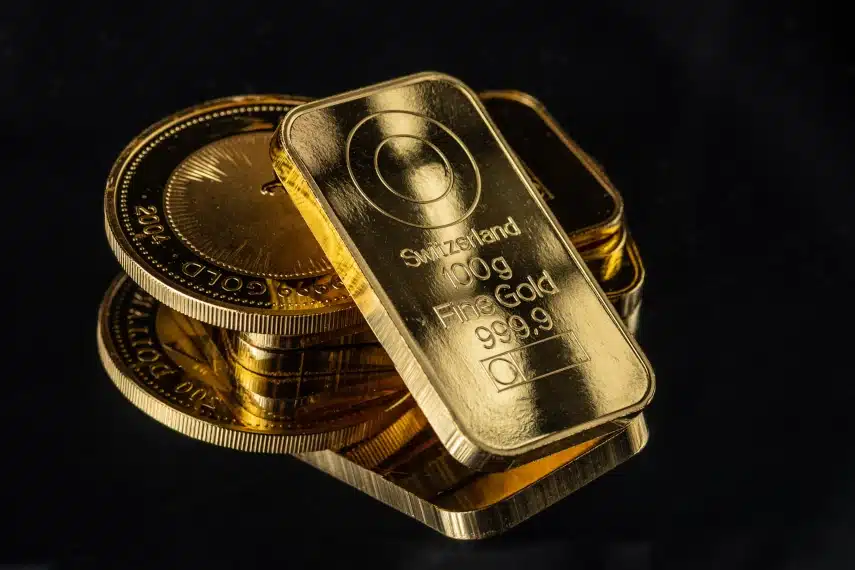
Gold bars and gold coins that are bought and sold every day around the world are often produced to similarly high purities. For the gold market, including both futures contracts and physical trading of gold bars, gold must be at least 99.5% pure gold (.995 fineness).
These high purity levels are also required for gold coins or gold bars that are acquired for people wishing to hold gold within a gold IRA. But in practice, most IRA-eligible gold coins or gold bars are minted or cast with even higher quality, with finenesses of .999 or .9999 (99.9% and 99.99% pure gold).
Most people understand that gold can be produced to a very high quality. But is gold also a liquid asset?
Is Gold a Liquid Asset?
When you think about liquid assets, you think about assets that can be easily sold for cash. Cash obviously is as liquid as it gets, but it’s an asset that many financial institutions want to minimize their holdings of, as it imposes storage and transfer costs and doesn’t offer any return.
As far as liquidity goes, gold is one of the most liquid assets there is, with gold markets operating nearly 24/7 around the world. Not only are gold markets widespread and liquid, but they’re pretty heavily traded too, with $361 billion of gold trading hands every day.
That liquidity in gold markets means that pricing is fairly transparent, and opportunities for arbitrage are relatively rare.
But now that we’ve seen that gold is both high quality and a liquid asset, can we say that gold is a high quality liquid asset?
What Is a High Quality Liquid Asset?
In the aftermath of the 2008 financial crisis, banking authorities sought to develop an international banking framework to shore up the banking system and prevent further such crises from negatively impacting the financial system.
Under the aegis of the Basel Committee on Banking Supervision, a committee created by central banks of the G10 countries in the 1970s, a third round of Basel Accords was undertaken, which is commonly referred to as Basel III.
Basel III builds upon the first two rounds of Basel Accords, from 1988 and 2004, with the express goal of reducing the risk of bank runs and bank failures through setting international standards for bank capital requirements, stress tests, liquidity regulations, and leverage.
Among the key characteristics of Basel III is its introduction of a liquidity coverage ratio (LCR), which is designed to ensure that banks have enough of a reserve of high quality liquid assets (HQLA) to survive a 30-day liquidity crisis.
For purposes of Basel III, high quality liquid assets (HQLA) are cash or assets that can be quickly sold for cash or pledged as collateral with no significant loss of value. Basel III created three different types of HQLA: Level 1, Level 2A, and Level 2B.
Among the assets considered Level 1 HQLA are coins and banknotes, central bank reserves, and securities guaranteed by sovereigns, central banks, or multilateral institutions such as the Bank for International Settlements (BIS) and International Monetary Fund (IMF). This would include US Treasury securities.
Level 2A HQLA include other marketable securities guaranteed by sovereigns and central banks, and corporate debt securities or covered bonds that are not issued by financial institutions and that have at least an AA rating. These assets are subject to a 15% haircut.
Level 2B HQLA include many residential mortgage-backed securities (MBS), corporate bonds that are rated at least BBB-, and some shares of stock that are not issued by a financial institution and that are traded on exchanges. These assets are subject to a 50% haircut.
Noticeably absent from the list of allowed HQLAs is gold.
Gold’s quality and liquidity are well-known. In fact, during the 2008 financial crisis gold was a vital source of liquidity to institutions that held gold and needed to come up with cash quickly.
The London Bullion Market Association cites recent research that:
“…argues that gold meets the characteristics of a Level 1 HQLA, namely low bid-ask spreads, high volumes, relatively low volatility and negative correlation with risky assets during stress periods. The quantitative analysis shows that gold is highly liquid and, indeed, among the most liquid assets across a sample of top tier government bonds both on a long term and during a financial stress event. Gold generally performs similarly to a 30-year US Treasury bond.”
With that kind of data backing it, not to mention the fact that central banks not only have been massive buyers of gold but also hold more gold than they do US Treasuries, it remains curious that gold still is not listed as an acceptable high quality liquid asset.
If gold is good enough for central bankers, why should it not be good enough for financial institutions?
You could be forgiven for thinking that there’s some sort of conspiracy underfoot to deny the importance of gold to the international financial system, or to provide incentives for banks to buy government bonds which help governments spend more money, versus buying gold which doesn’t fund government coffers.
But whatever the reasons for financial regulators to continue to overlook gold, the push to classify gold as an HQLA is well underway, with both the LBMA and the World Gold Council pushing for gold to receive official HQLA classification. Will that sway the decisionmakers in Basel?
We’ll just have to see. But if gold were to receive HQLA classification, what would that mean for the average gold owner?
What Could Happen If Gold Were to Become an HQLA
If gold were to become classified as an HQLA, it would become one of the assets financial institutions could own in order to comply with Basel III liquidity requirements. No longer would financial institutions be limited to government bonds, corporate debt, MBS, or stocks.
Given the research LBMA has cited regarding gold’s ability to serve as a high quality liquid asset, a classification of gold as an HQLA could mean that financial institutions might in the future start buying gold to hold in their vaults. And that increased demand for gold could end up providing an additional boost to the gold price.
Much of the rise in the gold price over the past several years has been attributed to demand from central banks, who have been net buyers of gold for years. If a few dozen central banks buying gold can provide that much of a boost to the gold price, just imagine how much extra demand for gold could result from hundreds of international banks and financial institutions buying gold to hold to fulfill their liquidity requirements.
Put Gold to Work for You
Whether or not gold ends up being classified as an HQLA, it remains a popular safe haven asset for people around the world. Its recent price growth and numerous recent all-time highs have brought gold renewed popularity and attention.
Buying gold can be done relatively easily, whether you want to buy physical gold coins to store at home, or gold bars and gold coins to store in a gold IRA. Goldco’s precious metals specialists have worked with thousands of customers over the years to help them benefit from owning gold.
With over 8,000 5-star reviews from our customers and over $3 billion in precious metals placements, Goldco has worked hard to become one of the best gold IRA companies in the country. Get in touch with Goldco today to learn more about your gold buying options.
While conventional 401(k) plans rarely offer direct physical metal options, savers can legally acquire physical gold by rolling over eligible 401(k) assets into a self-directed gold IRA...
Precious metals like gold and silver act as safe haven assets against persistent inflation, out-of-control federal spending, and economic volatility Silver demand is driven most heavily by...
Younger generations are increasingly turning to buying gold to help protect their wealth against inflation, currency devaluation, and the underperformance of traditional financial assets Gold...
*Applies only to qualified orders. Get up to 5% back in FREE Silver when you purchase $50,000 – $99,999 in Goldco premium coins. Get 10% in FREE Silver when you purchase $100,000 or more in Goldco premium coins. Cannot be combined with any other offer. Additional rules may apply. Contact your representative to find out if your order qualifies. For additional details, please see your customer agreement. Goldco does not offer financial or tax advice regarding the purchase of precious metals.