Gold, Silver, and Geopolitics: A Look Ahead for 2026
Share |
10min read
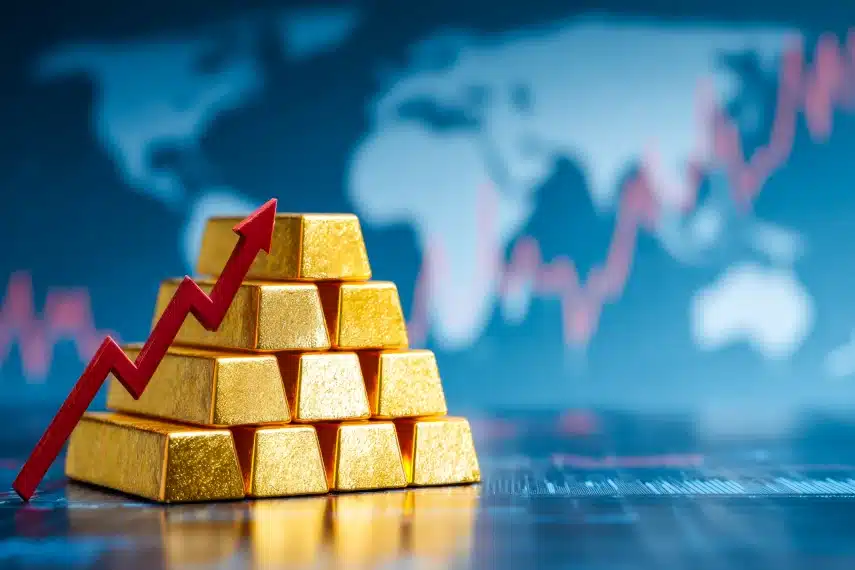
After price gains of 65% for gold and 144% for silver in 2025, gold and silver prices could rise further in 2026 due to geopolitical instability driving safe haven demand.
Potential conflicts on three fronts in Venezuela, Iran, and Greenland have helped erode trust in the existing international order, prompting a flight to safety.
The “Sell America” trade could gain momentum in 2026, with fears of armed conflict or trade wars helping drive markets and traders away from the dollar and into precious metals like gold and silver.
2025 was an amazing year for both gold and silver, as the gold price rose 65% and the silver price rose 144%. Coming into 2026, there was a great deal of speculation as to whether that kind of growth could be repeated.
While safe haven buying has driven gold and silver prices to record highs recently, much of that safe haven buying has previously been the result of domestic factors such as job market weakness and financial uncertainty.
Now, however, geopolitical factors could end up playing an increasingly important role in driving gold and silver prices higher in 2026. Tariffs were a major theme in 2025, and they could continue to play a role in 2026.
But there is an increasing risk of conflict around the world, and fear of a regional conflict, security and trade bloc realignments, or even major power conflict could help push gold and silver prices this year. Let’s take a look at some of the ways that geopolitics could impact gold and silver.
How Geopolitics Impacts Gold & Silver
When individuals buy gold and silver, it’s largely for personal financial reasons. Gold has served as a safe haven asset for centuries, as an inflation hedge, and as a store of wealth and value.
Individuals who purchase precious metals are often worried about their future financial well-being, and are looking to diversify their portfolios with precious metals to hedge against future financial uncertainty.
When geopolitics begins to play a role in gold and silver purchases, it isn’t just because of individuals buying gold and silver, but also because of institutions who start to purchase precious metals.
Whether it’s central banks, hedge funds, or financial institutions, institutional purchasers of gold and silver are also looking to diversify their holdings and hedge against risk. And the risk they’re increasingly trying to hedge against is the uncertainty of international relations.
When wars or military conflicts are a threat, there is the potential for a disruption of trade and ordinary economic activity. Those potential disruptions can impact business dealings and profits, and many people try to hedge against that.
While the war between Russia and Ukraine has been festering for years, the impacts of that conflict have largely already been felt throughout the world economy. But there are now some new potential geopolitical crises that could flare up and play a major role in impacting gold and silver prices in 2026.
Here are four of the major geopolitical themes that could impact gold and silver in 2026.
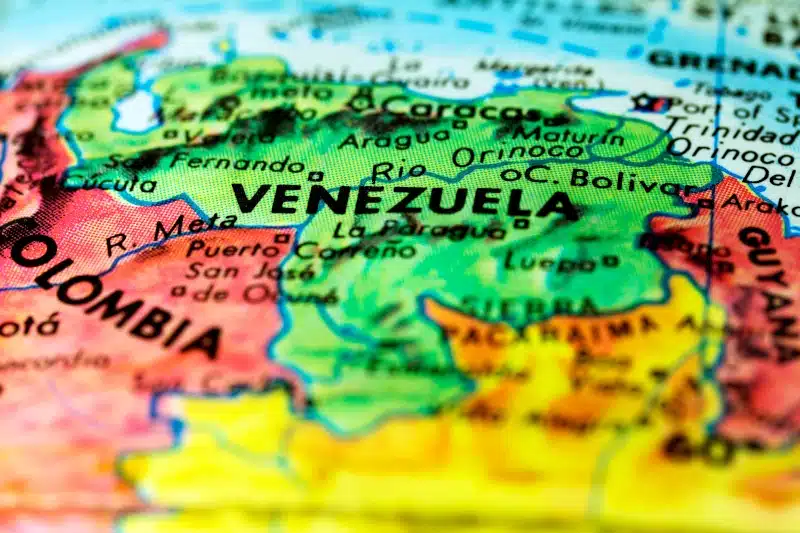
1. Venezuela and South America
The year started with a bang as President Trump launched a shocking raid on Venezuela to capture Venezuelan President Nicolas Maduro. By the time most Americans woke up and had their morning coffee, the raid was over and Maduro was on his way to an American prison.
The raid was a stunning demonstration of the US military’s capabilities, and a warning to other leaders who thumb their noses at the US. But the question that most people asked in the raid’s aftermath was, “What’s next?”
President Trump stated that the US would “run” Venezuela in the immediate future, but what does that actually mean? There are obviously no US boots on the ground in Venezuela, and Maduro’s lieutenants are still running the country, so this wasn’t about regime change.
For many people, the raid on Venezuela was more about sending China a warning signal not to get involved in the American hemisphere. China had been one of the biggest buyers of Venezuelan crude oil in recent years, as sanctions on Venezuela had limited the country’s ability to sell its oil to international buyers.
Now President Trump is controlling the sale of Venezuelan oil, and directing where the proceeds of those oil sales go. But what is the ultimate aim?
Will Trump continue to involve himself in Venezuela’s political affairs and oil industry? Could he launch more military strikes on the country if the new leaders don’t toe the US line?
Could Trump use his successful raid in Venezuela to put pressure on other South and Central American countries to fall in line with further US demands?
There are a lot of questions to deal with and a lot of uncertainty, and that uncertainty could boost demand for gold and silver every time events in Venezuela and South America pop up again.
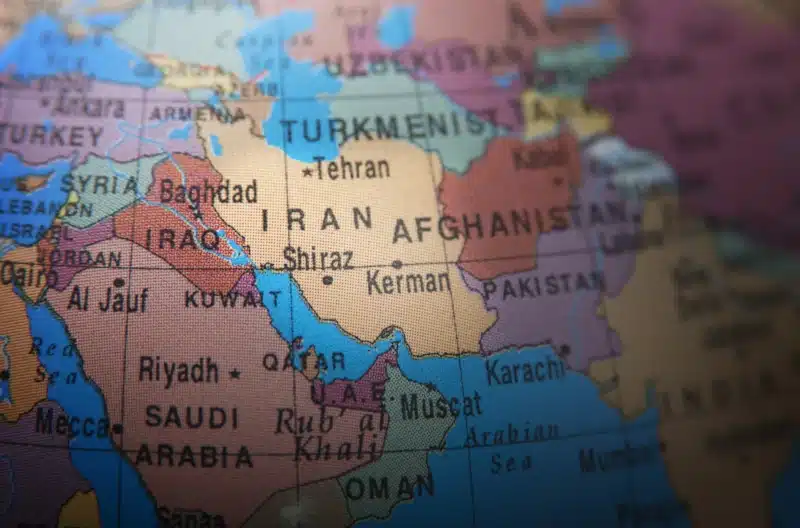
2. Iran and the Middle East
Recent protests in Iran began on December 28th as the result of discontent with high inflation and a struggling economy. But a bloody crackdown on protesters has resulted in thousands of deaths and thousands more arrests, with deaths estimated by some to range up to 20,000 and injuries up to 330,000.
President Trump has publicly stated that it is time for a change of government in Iran, and he has threatened military strikes against Iran in response to the crackdown on protesters. Thus far the order to strike has not yet come, but given the successful strike against Iran in June 2025, there would likely be nothing Iran could do to defend against such a strike.
The risk, however, is that a unilateral strike could inflame tensions in the Middle East and result in Iranian-backed terrorist groups striking US interests in the Middle East or lashing out against Israel, which could then result in further recriminations.
There’s a fine line to be woven here, and of course many questions that Americans (and others) are asking.
Can the US successfully launch major military strikes in two different areas of the world only weeks apart? If the US strikes Iran, what could the possible after effects be?
Can the US afford to get itself involved in the Middle East? And does Trump have the political capital or the political will to see things through to their conclusion if he does decide to strike Iran?
While there is no firm order to attack Iran yet, if such an attack were to occur, it could spark fear of a Middle East flareup, and could cause even more safe haven buying of gold and silver.
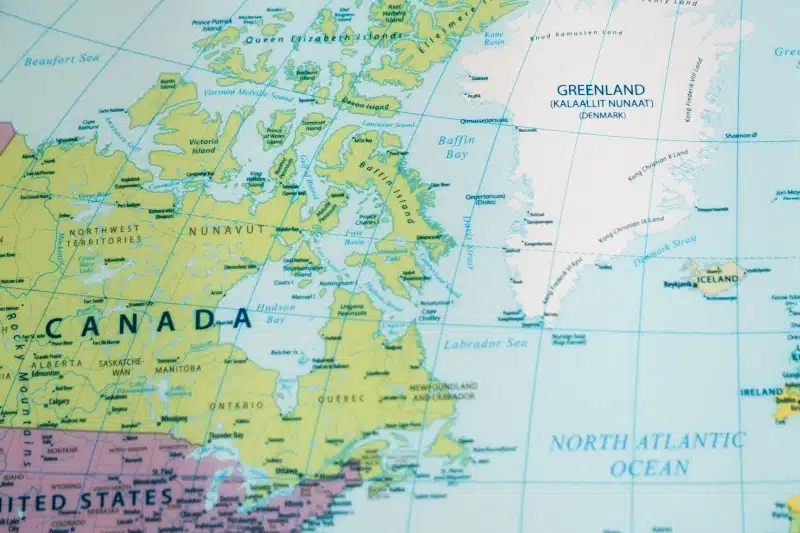
3. Greenland and Europe
President Trump has long stated that he wants the United States to control Greenland. The country’s proximity to the Arctic, which is increasingly becoming an area of conflict among powers including China and Russia, makes it an important strategic area for the United States.
While the US currently maintains a military base on Greenland, the island has largely been devoid of a major military presence, something which has allowed China and Russia to stake their claims to the Arctic region.
Not wanting to allow other powers to monopolize the Arctic, President Trump believes that US control over Greenland would allow the US to maintain its strategic influence in the Arctic region. In his view, US control of Greenland is both necessary and inevitable, and the US and its allies can either resolve this issue the easy way or the hard way.
European nations were shocked when President Trump recently threatened to impose tariffs on European nations he believed were stymieing his attempt to take over Greenland. And while he subsequently rescinded that plan, the damage may already have been done.
Whereas before some may have taken Trump’s comments about Greenland to be somewhat joking or semi-serious, this imposition of tariffs makes it clear that Trump isn’t playing around. And in the aftermath of the raid on Venezuela to capture Maduro, Europe is certainly taking Trump seriously.
What most people want to know now is, where does this end?
Will the EU come up with some sort of agreement to give the US greater control over Greenland? Will Trump try to take Greenland with military force?
Does the US military have the ability to take on simultaneous missions in South America, the Middle East, and Greenland? And what are the potential financial costs of taking control of Greenland?
Trump’s Greenland gamble has opened up a third front and has already scuttled the trade deal he struck with the EU. How far will he go in his desire to control Greenland?
If US-EU relations take a nosedive as a result of Trump’s Greenland gambit, it could push even more people into buying safe haven assets like gold and silver.
4. The Federal Reserve
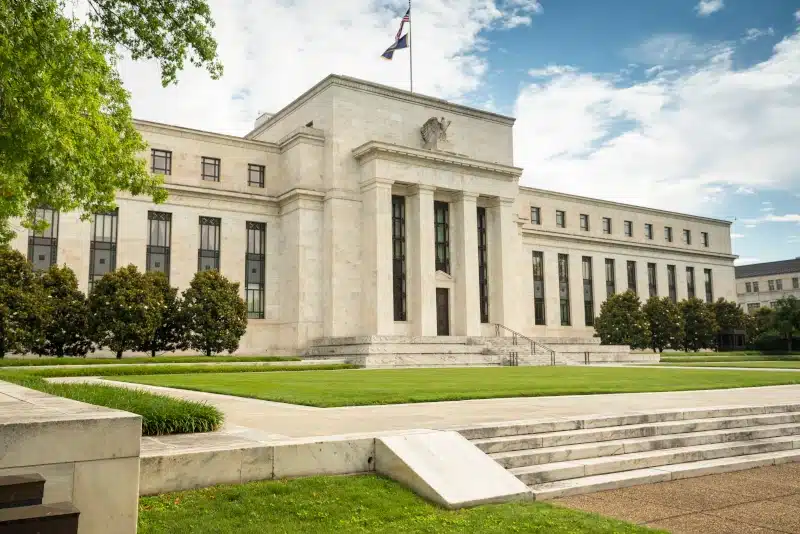
You may be wondering why the Federal Reserve is on the list of geopolitical factors that could influence gold and silver. And that’s because the Fed’s actions impact the value and international standing of the dollar, which still is the dominant world reserve currency.
President Trump has long expressed his displeasure with Fed Chairman Jay Powell, complaining that Powell isn’t being as aggressive as he should be in cutting interest rates. And now Trump has upped the ante by pursuing a criminal investigation into Powell surrounding his comments on renovations to the Fed’s headquarters.
On the face of it, it seems to be a blatant attempt to strong-arm Powell into acquiescing to Trump’s demands, or at least into forcing Powell to step down from the Fed. Powell’s term as Chairman ends in May, although his term as a member of the Board of Governors doesn’t end until January 2028.
Trump’s actions to pursue criminal charges have been seen in many circles as an attempt to end the Fed’s independence on monetary policy, and the attack on Powell has spooked markets and led to questions about how independent the Fed might be under a future chairman.
If the Fed is no longer seen as being independent of the President’s will but merely an instrument of the President’s policy and aiding debt-driven fiscal policy, it could erode the Fed’s standing with markets and lead to lower confidence in the dollar.
With the dollar having lost 88% of its purchasing power since 1971 and over 50% of its purchasing power since 2000, falling confidence in the dollar and in the Fed’s ability to keep the dollar from weakening substantially could weaken the dollar’s status internationally and lead to an exodus not only from the dollar but from dollar-denominated assets and US assets in general.
Will “Sell America” Be the Highlight of 2026?
The combination of these geopolitical factors is leading to what has been labeled the “Sell America” trade. Traders are having to assess how exposed they want to be to the dollar and to US assets in an era of increasing geopolitical unpredictability.
If “Sell America” becomes a thing, it could mean that traders and financial institutions might try to reduce their purchases of US Treasury debt, hold fewer dollars, or reduce their purchases of US stocks and bonds in order to minimize their exposure to United States markets.
Another thing it could do is spur further purchases of gold and silver, which have reputations as sound and stable safe haven assets.
Gold and silver aren’t unique to the US. They’re widely traded on world markets, in demand in countries around the world, and have generally low correlation to stocks, bonds, and other financial assets.
If trading houses and financial institutions look to move their assets away from exposure to a risky US market, gold and silver could be some of the assets they choose to move their money to, which could provide further impetus to gold and silver prices.
The Impact of Geopolitics on You
One of the key characteristics of these geopolitical events is their unpredictability. No one could have foreseen the capture of President Maduro.
No one knows whether Trump will end up attacking Iran and, if he does, what will happen as a result. And no one knows how the debate over Greenland will end up impacting US-EU relations down the road.
It’s because of this unpredictability that there is so much uncertainty surrounding the future. Whereas before international relations and international trade were governed by rules that everyone assumed weren’t going to change.
Then President Trump changed the rules, and now people are trying to figure out what happens next. This is a classic case of regime uncertainty, in which doubt about the future direction of government policies upends market operations.
In times of uncertainty, people tend to return to trusted sources of stability, including precious metals like gold and silver.
No one knows what the future holds. If the US military launches further strikes in the Middle East and South America, it could further destabilize those regions and lead to more military conflict, potentially disrupting oil markets and driving up the price of gasoline.
The dispute surrounding Greenland could result in a tariff war that could increase the prices of imported goods, including food. And we haven’t even mentioned the effects of existing tariffs, which could also get hiked further during a possible trade war, raising the costs of goods throughout the economy.
The long story short is that no one knows where events this year will lead, but there is certainly the potential for things to get very bad. And as long as fear and uncertainty remain, expect safe haven buying of gold and silver to continue.
Help Protect Yourself With Gold and Silver
If you’re worried about the potential effects that geopolitical events may have on your financial well-being, how much thought have you given to trying to protect yourself?
Nearly 40% of Americans bought gold and silver last year to help safeguard themselves, and most of those Americans are looking to buy more.
If you’re not one of those people who bought gold, what are you waiting for?
Last year the gold price rose 65% and the silver price rose 144%. This year both gold and silver have continued to set record highs, and some analysts believe that gold could hit over $7,000 an ounce while silver could reach over $150 an ounce.
Safe haven buying, whether it is the result of geopolitical fears or uncertainty surrounding the economy, is helping push gold and silver prices higher, benefiting gold and silver owners. Are you ready to take advantage of that potential price growth?
Goldco has helped thousands of Americans benefit from owning gold and silver, and our over 8,000 5-star reviews are a testament to our outstanding products and customer service. At Goldco we work hard to earn our reputation as one of the best gold and silver companies in the business.
Don’t let geopolitical events put your hard-earned savings at risk. Call Goldco today to learn more about how gold and silver can help you safeguard your future.
In recent weeks the gold price has seen some pretty significant price drops While gold prices are still far higher than they were at this point last year, the falling gold price has understandably...
Los Angeles, CA, April 2, 2026, The United States has added silver to its federal Critical Minerals List, highlighting the metal’s growing importance to national security, advanced...
*Applies only to qualified orders. Get up to 5% back in FREE Gold or Silver when you purchase $50,000 – $99,999 in Goldco premium coins. Get 10% in FREE Gold or Silver when you purchase $100,000 or more in Goldco premium coins. Cannot be combined with any other offer. Additional rules may apply. Contact your representative to find out if your order qualifies. For additional details, please see your customer agreement. Goldco does not offer financial or tax advice regarding the purchase of precious metals.