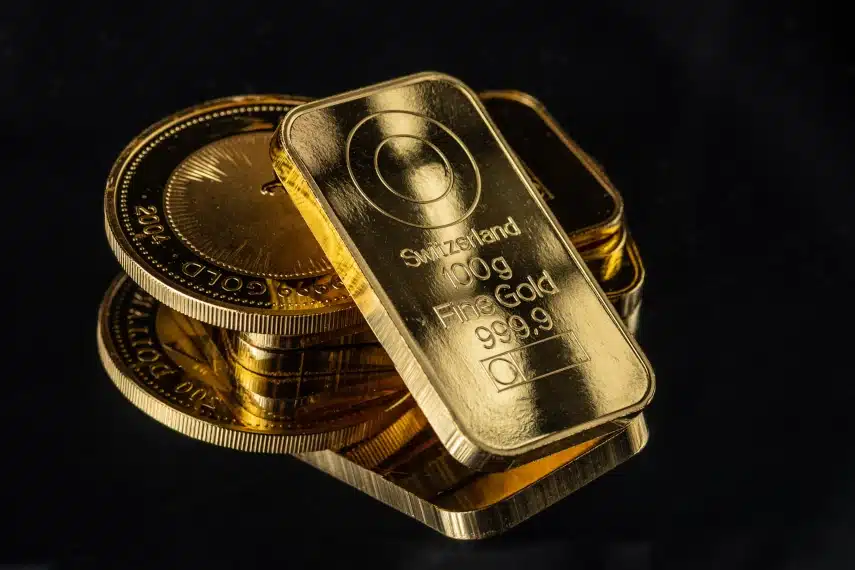
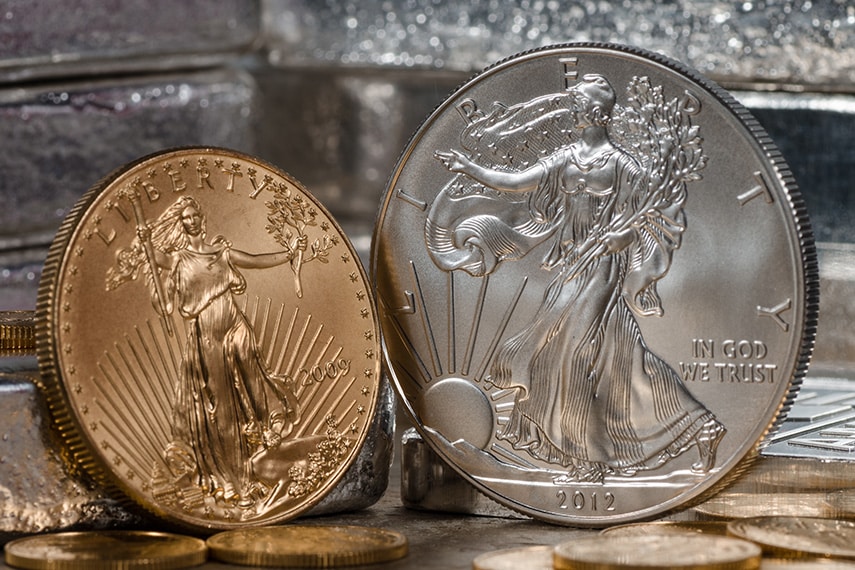
The U.S. government carries its 261.5 million ounces of gold at a statutory price of $42.22 per ounce (~$11 billion total), creating a massive accounting disparity against its current market value of over $1 trillion.
Adjusting the statutory price would enable the Treasury to issue higher-value gold certificates to the Federal Reserve, yielding spendable cash or borrowing capacity without physical sales or a gold standard return.
A comprehensive, independent audit verifying quantity, purity, and legal encumbrance is a critical precursor to legitimize and defend any balance sheet revaluation politically.
Unlocking a $1 trillion revaluation windfall addresses only ~2.5% of the $39.68 trillion national debt, serving as a temporary balance sheet adjustment rather than a fix for structural spending deficits.
For most of the modern fiat money era, the gold stored at Fort Knox has been treated as a museum piece with armed guards: historically evocative, politically symbolic, but economically inert. That assessment has become harder to maintain.
President Donald Trump has repeatedly raised the question of whether the gold is actually there. Gold prices have risen dramatically. The federal debt is approaching $40 trillion. And the government continues to value its gold at the statutory price of just $42.22 per fine troy ounce – a figure left over from 1973.
Those facts have produced an increasingly plausible question beneath the conspiracy theories: Is the renewed interest in Fort Knox merely about verifying the inventory, or could an audit prepare the ground for revaluing the Treasury’s gold?
Is The Gold Actually There?
The newest verified information arrived in mid-July. Treasury Secretary Scott Bessent told Fox News that US Treasurer Brandon Beach had visited Fort Knox and that “all gold is present and accounted for.”
Bessent added that the United States possesses more than $1 trillion in gold at current market values. He did not say that he had personally inspected it, nor did he announce a comprehensive independent audit. But his statement was notable because it simultaneously reassured the public about the existence of gold and called attention to the enormous difference between its official and market values.
That distinction matters, because a visit is not an audit. An assurance from a Cabinet official is not the same as a published inventory in which individual bars are weighed, assayed, numbered, reconciled against ownership records, and tested under an independently supervised sampling procedure.
The Treasury and Mint conduct continuing inspections and financial-statement audits, and officials have long maintained that the gold is secure. But the question being asked by skeptics is narrower: When was every relevant claim about the quantity, purity, ownership, encumbrance, and custody of the gold independently verified and reported in a form the public could examine?
According to Treasury data, Fort Knox held 147,341,858.382 fine troy ounces of deep-storage gold as of May 31, 2026. The government’s total gold holdings, including metal stored at West Point, Denver, and Federal Reserve facilities, amount to roughly 261.5 million ounces. Fort Knox therefore holds somewhat more than half of the Treasury’s gold.
The Price Disparity
At the statutory price of $42.2222 per ounce, all U.S. government gold is carried at only about $11 billion. At contemporary market prices, the same metal is worth more than $1 trillion. Fort Knox alone, officially valued at roughly $6.2 billion, has a market value in the neighborhood of $600 billion or more, depending on the day’s gold price.
That disparity is the source of the revaluation theory.
Revaluation would not require selling the gold or returning the United States to a gold standard. Congress could change the statutory valuation, allowing the Treasury to issue additional gold certificates to the Federal Reserve. The Fed would credit the Treasury for the higher certificate value, potentially giving the government hundreds of billions of dollars in additional cash or borrowing capacity.
Similar accounting operations have been discussed as a way to finance a strategic Bitcoin reserve, postpone a debt-ceiling crisis, capitalize a sovereign wealth fund, or reduce outstanding Treasury debt.
In one sense, nothing real would have been created. The gold would be the same gold, sitting in the same vault. Only its accounting value would change. Yet the operation could still have real consequences because the Treasury’s account at the Federal Reserve is spendable. Revaluation could transform an unrealized government asset into fiscal room without an immediate tax increase or conventional bond sale.
That is precisely why an audit might logically come first. Before raising the official value of an asset by hundreds of billions of dollars, the government would want to establish its quantity, quality, ownership, and legal availability. A transparent audit would also make a subsequent revaluation easier to defend politically: first verify the gold, then recognize its current value.
This sequence is plausible, but it remains an inference rather than an established administration plan. Neither Trump nor Bessent has publicly announced that a Fort Knox inspection will lead to revaluation. Bessent previously downplayed suggestions that gold would be revalued to create a sovereign-wealth fund.
The administration’s public comments have focused principally on whether the gold is physically present. Claims that a comprehensive audit has already been ordered, completed, or legislatively mandated should therefore be treated cautiously unless accompanied by a Treasury announcement, enacted legislation, or a published audit report.
Still, the Trump administration’s renewed interest is economically relevant because of the fiscal background. Treasury data put the national debt at approximately $39.68 trillion in July 2026, up from roughly $36.2 trillion around the beginning of Trump’s second term. In other words, the debt has risen by approximately $3.5 trillion even as Trump has continued to speak about using tariff revenue, immigration “gold cards,” asset sales, or other windfalls to reduce it.
Fiscal Relief vs. Structural Deficits
Revaluing all US gold would produce a large headline number, but it would not solve that problem. Even a $1 trillion revaluation gain would equal only about 2.5 percent of the outstanding federal debt. And unless the proceeds were used exclusively to retire debt while spending was restrained, the operation might merely finance additional expenditures. It could reduce Treasury borrowing temporarily without changing the structural gap between federal revenue and federal commitments.
It would also blur the boundary between monetary and fiscal policy. If the Federal Reserve credited the Treasury for a higher goldccertificate value, the government would effectively be monetizing an existing asset. Depending on how the transaction was structured and sterilized, it could enlarge the monetary base, affect the Fed’s balance sheet, or create expectations of future monetary accommodation. The accounting mechanics might be unusual, but the political temptation would be familiar: unlock an asset today while postponing spending reforms until tomorrow.
There is also a deeper reason Fort Knox matters. The government’s insistence that gold is monetarily irrelevant sits uneasily beside its decision to retain the world’s largest official gold stockpile. If gold truly has no monetary significance, why preserve 261.5 million ounces under extraordinary security for more than half a century? If it does retain strategic or monetary significance, why value it at less than one percent of its market price?
Gold’s recent rise makes that contradiction impossible to ignore. Central banks have been buying gold, geopolitical tensions have intensified, government debt has expanded, and confidence in sanctions-neutral reserve assets has grown. In that environment, the American gold stock is not simply an antique. It is an option: one that could be sold, pledged, revalued, swapped, or retained as a strategic reserve in a less dollar-centered world.
What A Proper Audit Looks Like
A proper audit should therefore answer more than simply “Are there bars in the vault?” It should disclose the number and serial identification of the bars; their gross and fine weight; their purity; whether they meet contemporary good-delivery standards; the extent to which older coin-melt bars would require refining; the ownership of every category of gold; whether any portion has been leased, swapped, pledged, or otherwise encumbered; the custody arrangements at every storage location; and the statistical procedures used to test the inventory.
The purity question deserves particular attention. Much of the gold accumulated before and during the mid-twentieth century was melted from coins and may not conform to the standardized 400-ounce, 99.5-percent-pure bars commonly used in international wholesale markets.
That would not mean the gold is fake or missing. It would mean that some of it could require refining before being sold or transferred readily in modern bullion markets. Sensational claims that Fort Knox is filled with “impure” gold often omit that distinction.
The most likely outcome of a genuine audit is mundane: nearly all the reported gold will be found, bookkeeping differences will be minor, and some bars will prove less immediately marketable than the public imagines. But even that result would matter. It would remove an unnecessary source of suspicion and give policymakers a sound factual basis for deciding what, if anything, to do with the reserve.
The danger is that Washington will confuse asset revaluation with fiscal repair. Marking gold closer to its market price could recognize an obvious economic reality and provide temporary financial flexibility. It cannot repeal arithmetic.
The United States did not accumulate nearly $40 trillion in debt because its accountants undervalued Fort Knox. It accumulated that debt because federal spending repeatedly exceeded federal revenue.
Conclusion
Whether the government ultimately revalues the gold, monetizes it, or simply leaves it untouched beneath Fort Knox, its very existence is a reminder that, however often policymakers deny or ignore the fact, gold remains the North Star of sound money – the benchmark to which monetary systems inevitably return whenever confidence in paper promises begins to erode.
Fort Knox matters now because it stands at the intersection of monetary history, public trust, fiscal desperation, and political symbolism. The gold is almost certainly there. The remaining questions are whether the government will prove that transparently, whether it plans to place a modern value on the asset, and – most important – what it would do with the money if it did.
About the author: Peter C. Earle, Ph.D, is the Director of Economics and Economic Freedom and is Head of Research who joined AIER in 2018. He holds a Ph.D in Economics from l’Universite d’Angers, an MA in Applied Economics from American University, an MBA (Finance), and a BS in Engineering from the United States Military Academy at West Point.
Prior to joining AIER, Dr. Earle spent over 20 years as a trader and analyst at a number of securities firms and hedge funds in the New York metropolitan area as well as engaging in extensive consulting within the cryptocurrency and gaming sectors. His research focuses on financial markets, monetary policy, macroeconomic forecasting, and problems in economic measurement. He has been quoted by the Wall Street Journal, the Financial Times, Barron’s, Bloomberg, Reuters, CNBC, Grant’s Interest Rate Observer, NPR, and in numerous other media outlets and publications.
Disclaimer: All opinions expressed by the author are the author’s opinions and do not reflect the opinions of Goldco. The author’s opinions are based on the author’s personal experience, education and information the author considers reliable. Goldco does not warrant that the information contained herein is complete or accurate, and it should not be relied upon as such.
Concerns over inflation and a potential market downturn are causing many Americans to question the safety of their retirement savings More and more Americans are considering buying gold, which...
While conventional 401(k) plans rarely offer direct physical metal options, savers can legally acquire physical gold by rolling over eligible 401(k) assets into a self-directed gold IRA...
Precious metals like gold and silver act as safe haven assets against persistent inflation, out-of-control federal spending, and economic volatility Silver demand is driven most heavily by...
*Applies only to qualified orders. Get up to 5% back in FREE Silver when you purchase $50,000 – $99,999 in Goldco premium coins. Get 10% in FREE Silver when you purchase $100,000 or more in Goldco premium coins. Cannot be combined with any other offer. Additional rules may apply. Contact your representative to find out if your order qualifies. For additional details, please see your customer agreement. Goldco does not offer financial or tax advice regarding the purchase of precious metals.



 About the author: