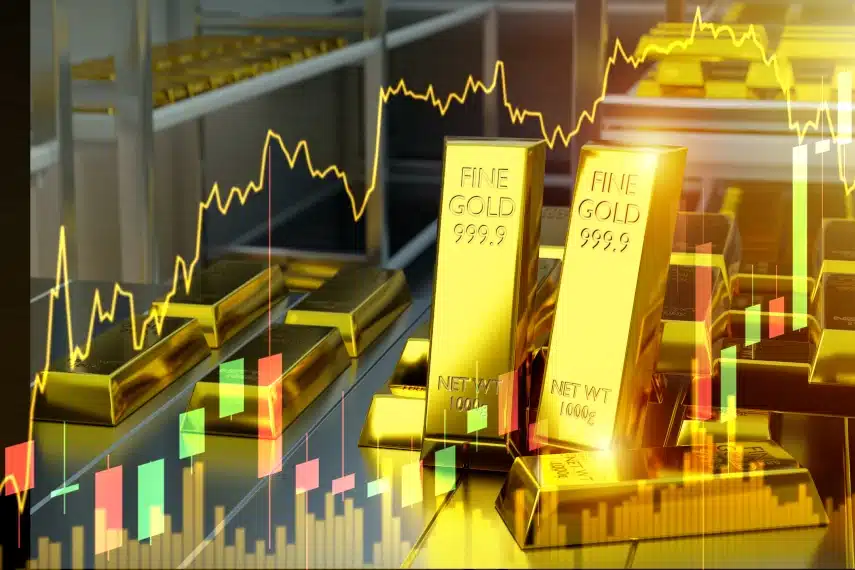
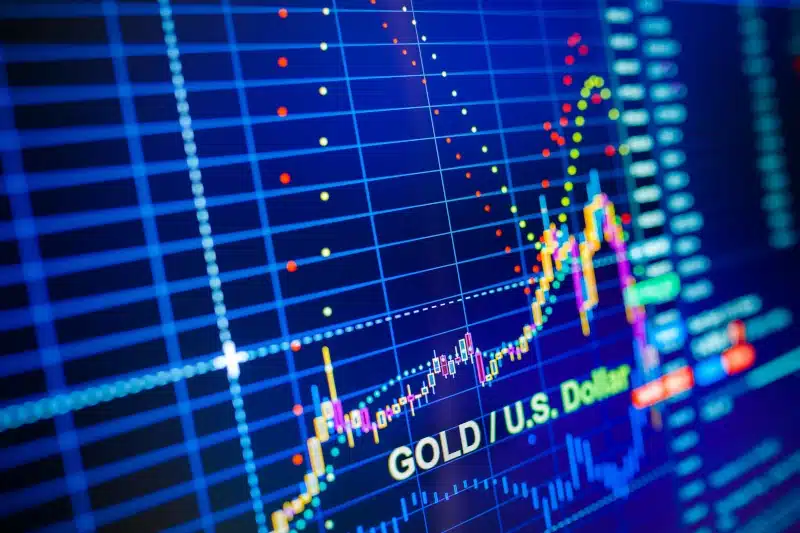
Rising national debt, dollar devaluation, and record central bank gold purchases have helped push gold prices higher over the past several years.
Amid persistent inflation and economic volatility, many financial analysts believe gold prices could still rise further and set new milestones in the coming years.
A tax-free rollover from existing retirement accounts into a gold IRA with the help of trusted partners like Goldco can help protect your retirement savings against economic downturns.
One of the most important, yet simultaneously underrated, trends of the 21st century has been the relentless rise of gold prices. From $269 at the beginning of the century, the gold price rose more than 20-fold to hit its all-time highs in 2026, and even after recent pullbacks is nearly 15 times higher than it was in 2001.
This performance over the past quarter century isn’t an anomaly either, but in the eyes of many is a response to rising debt levels and persistent currency devaluation. While the US dollar has seen its purchasing power erode over the years, gold prices continue to rise, pushing through multiple all-time highs from 2007 to today.
With government spending remaining out of control, the impending bankruptcy of Social Security, and ongoing wars and geopolitical conflict, the conditions are ripe for the gold price to continue rising well into the future. For Americans who are concerned about what the future holds, gold could play an important role in helping to protect them against an increasingly uncertain economic outlook.
As a traditional safe haven asset and inflation hedge, physical gold is uniquely positioned to help defend your wealth against severe economic headwinds. Whether you choose to start a gold IRA or make a direct cash purchase of physical gold coins to store at home, owning physical gold can provide a level of security during a time of economic uncertainty.
4 Key Indicators Driving the Future of Gold Prices
Predicting the future movements of any price is inherently difficult. Very often they can be influenced by an analyst’s inherent biases and outlook for the future.
While predicting an actual numerical value for gold in any given time frame is nearly impossible, you can still make educated guesses about the direction of the gold price if you look at some of the long-term, structural factors that impact gold prices.
In doing so you have to screen out short-term price swings that may be influenced by what’s going on in the Middle East, how many jobs were gained or lost this month, or what’s going on with Wall Street’s latest darlings.
If you want to build long-term wealth using gold, or if you want to use gold as a protective buffer within your diversified portfolio, there are certain key indicators you’ll want to pay attention to.
Key Indicator
How It Impacts Gold
1. Rising National Debt, Declining Dollar
Reduces trust in the dollar, which could drive more people towards gold.
2. Federal Reserve Monetary Policy
Continued inflationary monetary policy devalues the dollar, and rising inflation fears could drive more interest in gold.
3. Central Bank Gold Purchases
Central banks continue to buy gold, with nearly 90% of central bankers expecting official gold reserves to increase over the next year.
4. Safe Haven Asset Buying
If economic conditions deteriorate, gold is one of the first safe haven assets people flee to, which could drive up gold prices.
1. Runaway National Debt and Currency Devaluation
One of the most pressing threats to your retirement savings is the rapidly increasing US national debt, which is quickly approaching $40 trillion. Annual budget deficits are already close to $2 trillion, and are expected to grow to over $3 trillion by 2036.
Perhaps most worryingly, interest expense on the debt is expected to reach over $1 trillion in 2026 and rise to over $2 trillion a year by 2036. This risks trapping the federal government in an inflationary debt spiral, with the federal government having to continue borrowing trillions of dollars every year just to pay interest on the existing debt.
A debt load this massive is essentially unpayable, and very likely will result in further monetization of the debt by the Federal Reserve. This continuing monetization could further devalue the dollar, reducing the purchasing power of the dollar more and more every year.
The US dollar has already lost 88% of its purchasing power since 1971, while the gold price has risen over 10,000% since that time. If the national debt continues to climb, don’t be surprised to see the US dollar and the gold price continuing to move in opposite directions.
2. Federal Reserve Monetary Policy
While gold prices may be sensitive to short-term movements in interest rates, it’s the longer-term cycles of Federal Reserve monetary policy that could provide the most support to the gold price.
Even if the Fed does move to hike interest rates in the near future, Fed monetary policy remains extraordinarily accommodative, with the Fed’s balance sheet significantly higher than during the pre-crisis era.
If the US economy were to fall into recession, the Fed might react in the same way that it did in previous recessions, cutting interest rates and engaging in large-scale asset purchases to try to prop up the banking and financial system.
These monetary policy moves could make gold far more attractive not just in the US, but around the world. And the inflationary aspect of further quantitative easing could continue devaluing the dollar, helping propel the gold price ever higher.
3. Record-Breaking Central Bank Accumulation
Global central banks are adding to their gold reserves at rates never seen before in modern history. Central bankers in nations like China, Russia, and the BRICS bloc understand the structural weakness of the dollar and are actively shifting their reserve assets away from the US dollar and into physical gold.
Central banks around the world now hold more assets in physical gold than in US Treasuries, something that just a decade or two ago might have seemed unthinkable.
Because central banks recognize that physical gold is the ultimate, non-defaultable reserve asset, and because they continue to add gold to their coffers, these central bank gold purchases have established an incredibly strong price floor for the yellow metal.
4. Severe Underperformance of Financial Markets During Crises
During times of economic contraction, the performance of physical gold stands in stark contrast to traditional financial assets. Because of that, many people rush to gold as a safe haven asset during times of crisis, which helps further push up the gold price.
Of course, it isn’t just during times of crisis that the gold price has done well versus financial markets, as gold’s overall performance during the 21st century can attest.
Time Period
US Dollar Devaluation
S&P 500 Performance
Gold Price Gain
Stagflation (1970-1979)
51%
16%
1398%
Great Recession (Oct. 2007 – Mar. 2009)
-2%
-57%
25%
21st Century (2001-present)
48%
477%
1405%
Long-Term Gold Price Forecasts
Given the scale of global debt, geopolitical tensions, and persistent monetary inflation, the future for the gold price remains highly bullish. Gold prices posted an exceptional 65% gain in 2025, and continued to shatter records 2026 as they pushed past $5,000 an ounce.
If the US economy were to enter another recession, particularly if it’s as severe as the 2008 financial crisis, the gold price could see explosive growth. During the crisis, gold prices rose 25% while stock markets fell more than 50%, and in the aftermath of the crisis gold prices nearly tripled before hitting new highs in 2011.
Many prominent financial commentators believe that current economic conditions bode well for the gold price, which they believe could rise by several thousand dollars.
Here’s what some of them are saying about gold prices in the future:
John Paulson, the billionaire hedge fund manager, believes that gold is still in the early stages of a bull market. He believes that as people continue to lose faith in paper currencies, they will turn to gold as an alternative.
Bank of America analysts believe that gold will hit $6,000 an ounce within the next 12 months.
Analysts at JPMorgan have a gold price target of $6,000 to $6,300 an ounce.
Jamie Dimon, CEO of JPMorgan, said late last year that in times like these gold could easily reach $5,000 or even $10,000 an ounce. Gold subsequently reached the $5,000 mark, so how much longer will it be before it reaches the $10,000 milestone?
Robert Kiyosaki, author of “Rich Dad Poor Dad”, believes that gold will reach $35,000 an ounce within 5 years.
Help Protect Your Retirement Savings: The Gold IRA Rollover
If you have spent decades building a retirement nest egg, keeping that egg in one basket can leave you vulnerable in the event of a market downturn. Through a gold IRA rollover you can diversify your portfolio into physical gold, helping to protect yourself against the impacts of a market downturn while still enjoying the same tax advantages of your current retirement accounts.
The Gold IRA Rollover Process in 3 Easy Steps
Performing a gold IRA rollover is a straightforward process that does not trigger any tax liabilities or early withdrawal penalties when executed correctly. The entire process can be completed in three simple steps:
First, you will establish a self-directed gold IRA account with an IRS-approved custodian who specializes in alternative precious metal assets.
Second, you will contact your current retirement plan administrator to initiate a direct, tax-free transfer of funds from your existing 401(k), 403(b), TSP, or IRA accounts into your new gold IRA.
Third, you will select your IRA-eligible gold coins or gold bars from Goldco to be shipped securely and stored at a state-of-the-art bullion depository.
Partnering With Goldco
If you’re looking to start a gold IRA, working with an experienced and highly trusted partner like Goldco can help ease the process. Goldco has helped thousands of Americans protect their savings with gold and silver, with more than $3 billion in precious metals placements.
Our commitment to white-glove customer service, direct relationships with mints around the world, and a highly competitive buyback guarantee* has earned us over 8,000 five-star reviews, an A+ rating from the Better Business Bureau, and a reputation as one of the best gold IRA companies in the country.
Don’t let runaway government spending, dollar devaluation, and market volatility put your financial future at risk. Contact a Goldco specialist today to learn how easily you can help safeguard your hard-earned retirement savings with physical gold.
*Please contact your Goldco representative for more information about Goldco’s Buyback Guarantee.
Younger generations are increasingly turning to buying gold to help protect their wealth against inflation, currency devaluation, and the underperformance of traditional financial assets Gold...
Key Takeaways Gold prices and government bond yields are rising simultaneously as buyers demand higher compensation for long-term fiscal, duration, and inflation risks rather than economic...
Rising gold prices are a warning signal, indicating increased safe haven buying from individuals and institutions looking for safety amid a potential stock market bubble, geopolitical...
*Applies only to qualified orders. Get up to 5% back in FREE Silver when you purchase $50,000 – $99,999 in Goldco premium coins. Get 10% in FREE Silver when you purchase $100,000 or more in Goldco premium coins. Cannot be combined with any other offer. Additional rules may apply. Contact your representative to find out if your order qualifies. For additional details, please see your customer agreement. Goldco does not offer financial or tax advice regarding the purchase of precious metals.