If QE Ending Causes This Much Pain, What Happens When QE Unwinds?
Share |
2min read
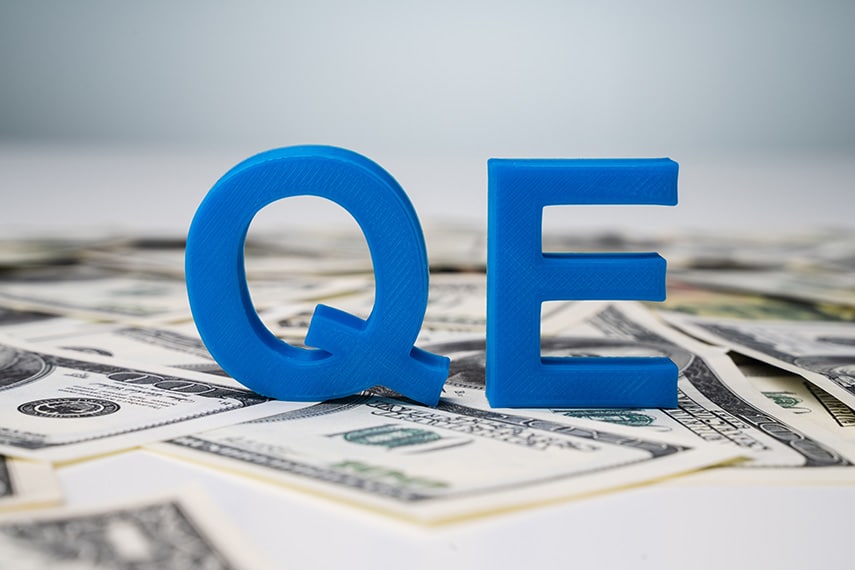
Stock markets have been topsy-turvy in recent weeks, with investors continuing to remain nervous about the direction of markets as interest rates continue to rise. President Trump has blamed the Federal Reserve and its raising of the target federal funds rate for weakening the economy and unnerving markets. But if merely raising rates has caused this much unease in markets, how much worse will markets get when central banks around the world start to really unwind the massive positions they have accumulated via quantitative easing (QE)?
It’s no secret that markets have been buoyed by central banks ever since the financial crisis. The trillions of dollars that central banks created out of thin air to prop up the financial system remain in the system, with central banks continuing to hold trillions of dollars worth of financial assets that they didn’t before the crisis. With central banks looking eventually to unwind those positions, those massive asset sales could further depress already sagging stock and bond prices.
In addition to at one point holding one-fifth of their countries’ total national debt, central banks purchased trillions of dollars of additional securities, both stocks and bonds. The four major central banks (Federal Reserve, European Central Bank, Bank of Japan, and Bank of England) still hold over $11.3 trillion in assets that they accumulated through QE. A return to “normal” monetary policy would entail drawing down those assets significantly. The Fed is already undertaking this, which may be partially to blame for stock and bond market weakness right now, but when the other central banks begin their normalization the entire world economy will feel that same weakness.
That’s bad news for investors who are dependent on stock and bond investments for the majority of their wealth. If you thought the bloodbath of 2008 was severe, just wait until central banks completely unwind their balance sheets. Bursting stock markets during the financial crisis lost well over 50% of their value, and there’s no doubt that a central bank unwind will likely result in the same kind of loss in the future.
Investors need to be aware that the QE unwind is a matter of when, not if. Central banks cannot and will not support markets forever, that’s not their function. When that support comes to an end, asset prices will drop across the board, with one major exception. That’s gold.
Gold has acted as a hedge against inflation and financial calamity for centuries, continues to do so today, and will continue to play that role well into the future. Gold prices have already reacted to stock market weakness by rising significantly, and every indication is that gold will go on a tear once the economy enters another bear market. Those investors who decide to invest in gold will benefit greatly during the coming crash and help safeguard their hard-earned assets from an inevitable decline in value.
Key Takeaways The US national debt breached $40 trillion, adding roughly $65 billion in debt per day over a 22-week span with little political reaction In response to surging long-term...
Key Takeaways The US government carries its 2615 million ounces of gold at a statutory price of $4222 per ounce (~$11 billion total), creating a massive accounting disparity against its current...
Rising national debt, dollar devaluation, and record central bank gold purchases have helped push gold prices higher over the past several years Amid persistent inflation and economic...
*Applies only to qualified orders. Get up to 5% back in FREE Silver when you purchase $50,000 – $99,999 in Goldco premium coins. Get 10% in FREE Silver when you purchase $100,000 or more in Goldco premium coins. Cannot be combined with any other offer. Additional rules may apply. Contact your representative to find out if your order qualifies. For additional details, please see your customer agreement. Goldco does not offer financial or tax advice regarding the purchase of precious metals.