
Precious Metals
China and Precious Metals: What You Need to Know


5 min read
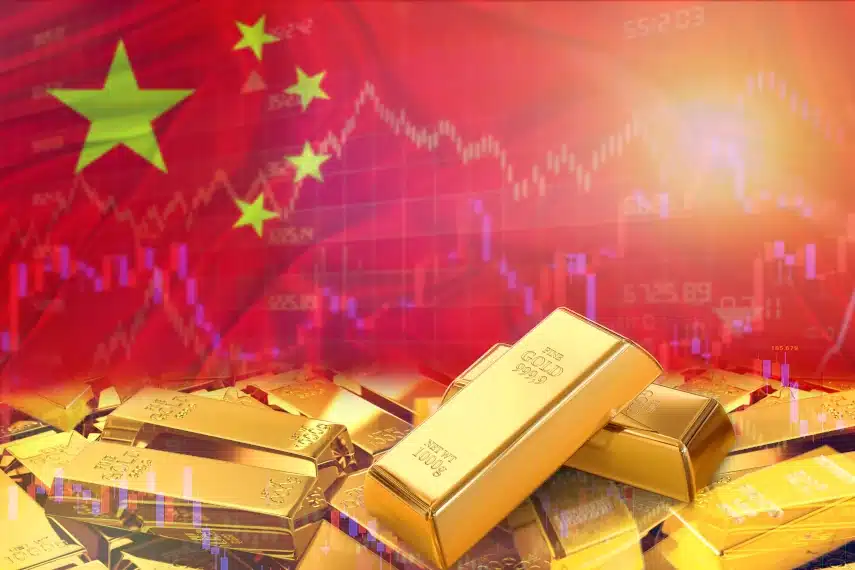
- Although China is a top producer of gold and silver, strict export controls keep much of its precious metals off of world markets, thus limiting worldwide gold and silver supply.
- Chinese precious metals buyers and metals exchanges have been gaining in importance, and were responsible for recent price surges in both gold and silver.
- Gold and silver buyers in the US will need to look at events both in the US and China in order to gauge the direction of future gold and silver price movements.
Ever since the end of World War II, the US economy has been the world’s largest and most important. As Americans, we have gotten used to the idea that the world economy revolves around the United States.
But other countries are catching up, notably China, and China’s role and importance in the global economy is growing. Recent events in precious metals markets have underscored the fact that actions in Chinese markets can have just as much impact on gold and silver as actions in North America and Europe.
China has a long history with gold and silver, as it remained a silver standard country long after the Western world had switched to the gold standard. And today China is both a major producer and consumer of gold, with an impact on gold markets that may only continue to grow.
China and Gold Supply
China is currently the largest producer of gold in the world. And one big question many people have is, how much of that gold is leaving China?
There are concerns that Chinese gold production may be mostly consumed within the country, which some speculate may be due to the Chinese government possibly looking to internationalize the yuan through backing it with gold.
Exports of gold from China are limited, and 94% of those gold exports take the form of shipments from the mainland to Hong Kong. So even though China is the world’s largest producer of gold, that production doesn’t make its way to world markets.
Gold exports are also highly regulated by the Chinese central bank, which maintains tight control over the gold trade, thus highlighting the importance of gold when it comes to monetary and banking policy.
China and Silver Supply
China is also the second-largest producer of silver in the world, with an estimated 3,400 tons of silver produced in 2025. That accounts for about 13% of total world production.
Most importantly for world silver markets, China has begun treating silver in a similar manner to strategic minerals like rare earth metals, imposing strict export controls and licensing of silver.
Speculation surrounding an export shutdown helped boost silver prices in January 2026. That’s only natural when you consider that China is the world’s largest producer of solar panels, which rely on silver for their production.
Also contributing to heightened silver prices is the growing importance of the Shanghai Metals Exchange, which is becoming an important precious metals trading hub in China. Price movements there were helping drive the silver price in late January, with many Western traders watching what was happening in China before making their own trading decisions.
With Chinese industry being such a large consumer of silver, it’s only natural for the Chinese government to want to try to keep that silver within the country. But by keeping that silver within China, it cuts down on the amount of silver available in the rest of the world, which could drive up prices.
Just look at tungsten, which China similarly subjected to export controls, and which has more than doubled in price since late 2025. As long as China remains a major silver consumer and keeps its silver within its own borders, events in China could continue having a significant impact on silver markets.
China and Gold Demand
Not only is China the largest producer of gold in the world, it is also the world’s largest consumer of gold. Even though Chinese gold consumption has slowed in recent years, gold demand remains strong, and demand for gold coins and gold bars has finally surpassed demand for gold jewelry.
The Chinese central bank is among the world central banks that has made purchases of gold in recent years, and gold seems to play a major part in China’s conduct of monetary policy.
Chinese consumers are voracious consumers of gold, whether in coin or bar form or in the form of gold jewelry, and as the Chinese middle class grows larger and more affluent, demand for gold in China could continue to rise. With over 50% of Chinese gold consumption in 2025 going towards bars and coins, it will be interesting to see if that structural change continues in the future.
China and Silver Demand
As the producer of over 80% of the world’s solar panels, Chinese industrial demand for silver is robust. But China hasn’t been a large consumer of silver for other purposes.
According to the Silver Institute, worldwide silver demand for investment is highly concentrated, with the US, India, Germany, and Australia accounting for 80% of worldwide silver investment demand. But could that be changing?
Part of the reason for silver’s record high prices in late January 2026 was due to speculation from the Chinese silver market. Prices in Shanghai seemed to drive worldwide silver prices ever higher.
That could indicate a growing role for Chinese traders in the world silver market, and could mean that Chinese markets may start playing a more important role in setting silver prices.
Lessons for Gold and Silver Buyers
The takeaway from recent events in gold and silver markets is that China is playing an increasingly important role in driving gold and silver prices. Just because we as Americans see dollar price quotes for gold doesn’t mean that the US economy and events in the US will be the dominant factors behind gold and silver buying that can push prices up.
Remember that China doesn’t have a financial system or stock market that is as well developed as the United States. Because of China’s communist system, Chinese citizens have been relatively limited in how they can build their wealth, with bond trading having only begun in 1986 and the country’s first stock market having only been founded in 1990.
Because of that, Chinese citizens have traditionally preferred to put their money into tangible assets such as real estate or precious metals. Remember the Chinese real estate bubble, and how many Chinese people lost huge amounts of money when that began to collapse?
The reason so many people bought real estate was because it was one of the few assets they trusted to help them build wealth. Gold and silver are another one of those tangible assets, which is one reason they are gaining in popularity in China.
If you’re looking to buy gold and silver, you’re probably looking at them for the same reason that Chinese buyers are too. You’re looking for a safe haven asset to help protect your wealth, a tangible asset that tends to maintain its value against inflation, and an asset that can gain value even during periods of economic downturns.
You’ll need to consider not just what is happening to the US economy when it comes to buying gold and silver, but also what is happening to the Chinese economy and to what Chinese buyers are doing.
The Future of Gold and Silver
This doesn’t mean that gold and silver will be completely dependent on events in China, of course. Precious metals markets operate around the world almost 24/7, and gold and silver production and consumption occur in other countries aside from China.
This just means that looking at the US economy as a bellwether for gold and silver’s performance isn’t necessarily going to give you an accurate picture of what’s happening in precious metals markets. With gold being an important safe haven asset, an economic slowdown in China could spur safe haven buying there that could push gold prices higher, even if the US economy is doing just fine.
And of course this doesn’t mean that you should avoid buying gold and silver either. Both metals are important safe haven metals, and both have seen record price growth in recent months, hitting all-time highs.
Many analysts expect silver and gold prices to keep climbing, and as fear of economic uncertainty grows, safe haven buying of gold and silver could continue. If you’re looking to buy gold and silver, there’s no better time to buy than today.
News and Articles
People Also Read


Precious Metals
March 20, 2026
Is A Gold IRA The Right Choice For You?
Over the past few years, much of the peace and tranquility Americans took for granted seems to have been upended The post-COVID era, rather than returning to the normal so many people longed for,...
Precious Metals
March 19, 2026
Is China’s New Gold Mine a Game Changer?
China is attempting to internationalize the yuan and challenge the US dollar’s dominance as a world reserve currency The recent discovery of a potentially massive gold mine in China could...
