A Strong Stock Market Doesn’t Mean a Strong Economy
Share |
2min read
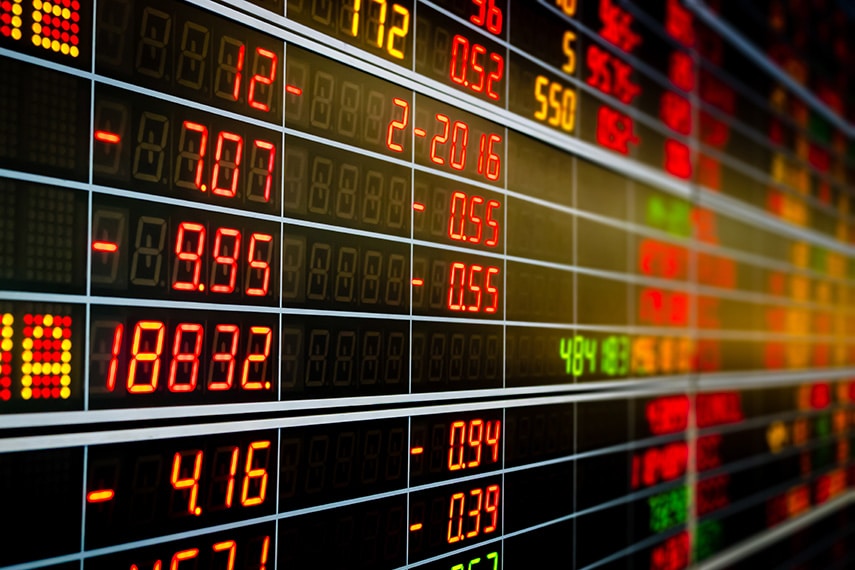
For decades, stock markets have been viewed as proxies for the strength of the economy. The higher stock market indexes go, the stronger the economy is deemed to be. The most famous index, of course, is the Dow Jones Industrial Average, which in recent days has pushed back to record new highs. But while many people, President Trump included, view a strong stock market as an indicator of a strong economy, that isn’t really the case.
In fact, that hasn’t really ever been the case. That should have been clear in the aftermath of the 1929 stock market crash, in which weak economic fundamentals were finally exposed, ushering in the Great Depression. Because stock markets can fall victim to speculative fervor and are heavily influenced by central bank money creation, if not outright purchases of equities by central banks, they are really more of an indicator for economic bubbles rather than economic growth. And that’s what we’re witnessing again right now.
The weakness in stock markets earlier this year and their inability to find a direction should have warned individuals that trouble was lurking around the corner. The fact that the Dow and other indexes have recovered and are setting new highs doesn’t indicate that the economy is strong. It’s just the result of trillions of dollars of new money that the Fed created, finally making its way into stock markets. We saw the same thing during the last financial crisis, when stocks peaked in October 2007 even after it became clear that Bear Stearns was in a boatload of trouble.
From there, it was a steady downward path until things really got bad a year later. The trough didn’t occur until early 2009, at which point stock markets had lost nearly 60% of their value. Right now stock markets appear to be following much the same pattern as during the last crisis, which means we can expect another major crisis within a year. That will mean the end of the “everything” bubble that the Fed has created.
In order to protect themselves, people need to look towards assets that will hold their value in the face of financial calamity. Gold is one of those assets, and is perhaps the best and most popular choice. Many have trusted gold for centuries to safeguard the value of their assets. And right now gold is working through the same price pattern as it did during the financial crisis, declining slightly in value this year just as it did for the first part of 2008.
But just as those who purchased gold in 2008 saw their asset more than double in the years that followed, those who buy gold today will also see their purchase make huge gains when stock markets crash. That crash is a matter of when, not if. Just as in 1929, 2000, and 2008, record highs often presage a downturn. Don’t let yourself get caught like many others will.
Unless you’ve been living under a rock for the past few years, you’ve probably heard about artificial intelligence (AI) In fact, you’re probably sick of hearing about it, as AI has become a...
Oil and gas prices have risen significantly in the last few months as a result of the war against Iran Consumer and producer price indices have risen as a result, and there are fears that...
Key Takeaways Gold is no longer just reacting to Federal Reserve interest rate hikes or cuts; it is now pricing in the structural deterioration of sovereign balance sheets The US is currently...
*Applies only to qualified orders. Get up to 5% back in FREE Silver when you purchase $50,000 – $99,999 in Goldco premium coins. Get 10% in FREE Silver when you purchase $100,000 or more in Goldco premium coins. Cannot be combined with any other offer. Additional rules may apply. Contact your representative to find out if your order qualifies. For additional details, please see your customer agreement. Goldco does not offer financial or tax advice regarding the purchase of precious metals.